Contact us
Send Us Your Case Details
We’ll respond and let you know the best way to proceed with your case.


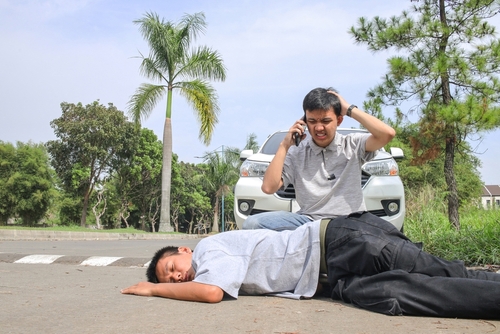
Pedestrians injured in Dayton car accidents have significant legal rights under Ohio law, including the right to seek compensation for medical expenses, lost wages, and pain and suffering when another party’s negligence caused the collision. Understanding these rights can make the difference between recovering full compensation or accepting an insurer’s lowball settlement. Ohio’s legal framework provides protections for injured pedestrians, but navigating the claims process requires knowledge of comparative negligence rules, filing deadlines, and what to do when drivers flee the scene. Whether you were struck at an intersection or along a Montgomery County roadway, knowing your rights is the first step toward protecting your recovery.
If you or a loved one has been injured in a pedestrian accident, The Attkisson Law Firm can help you understand your options. Call 937-400-0000 or contact us online to discuss your case.
Ohio law places specific duties on drivers to exercise reasonable care around pedestrians, and when drivers breach those duties, injured pedestrians may pursue compensation through a personal injury claim. Drivers who speed, ignore crosswalks, drive while distracted, or fail to yield can be held liable for the harm they cause. To succeed in a pedestrian injury claim, you must establish four elements: the driver owed you a duty of care, the driver breached that duty, the breach directly caused your injuries, and you suffered actual damages.
Pedestrians hit by cars in Ohio often face serious injuries requiring extensive medical treatment. These injuries can include broken bones, traumatic brain injuries, spinal cord damage, and soft tissue injuries requiring ongoing rehabilitation. Under Ohio law, injured pedestrians may seek compensation for both economic damages like medical bills and lost income, as well as non-economic damages like pain and suffering.
💡 Pro Tip: Document everything from the moment of the accident. Take photos of the scene, gather witness contact information, and keep all medical records organized. This evidence becomes critical when proving negligence and calculating your damages.

Ohio follows a modified comparative negligence rule that directly impacts how much compensation an injured pedestrian can recover. Comparative negligence is a tort principle used by courts to reduce damages a plaintiff can recover based on the degree of negligence each party contributed to the incident. This means that even if you were partially at fault for the accident, you may still have the right to seek compensation.
Under Ohio’s modified comparative negligence system, a plaintiff cannot recover damages if they are assigned more than 50% of the fault. As long as your contributory fault was not greater than the combined fault of all other persons from whom you seek recovery, you retain the right to pursue a claim under Ohio Revised Code Section 2315.33.
If you are found partially at fault, your compensatory damages are reduced proportionally to your percentage of fault. For example, if a jury determines your total damages are $100,000 but finds you were 20% at fault, your recovery would be reduced to $80,000.
| Plaintiff’s Fault Percentage | Can You Recover? | Damage Reduction |
|——————————|——————|——————|
| 0-50% | Yes | Reduced by fault percentage |
| 51% or more | No | Barred from recovery |
💡 Pro Tip: Insurance adjusters may try to argue that you were more at fault than you actually were to reduce your payout. Never give a recorded statement to an insurance company without first understanding how it could affect your claim.
When contributory fault is asserted as an affirmative defense in Ohio, the court follows specific procedures to determine each party’s responsibility. If you are found contributorily at fault and that fault was a direct and proximate cause of your injury, the court apportions liability among multiple defendants pursuant to ORC 2307.22, which works in conjunction with ORC 2315.34 governing jury interrogatories on fault percentages.
Pedestrian accident cases in Dayton often involve complex liability questions that benefit from experienced legal guidance. Insurance companies have teams of adjusters and lawyers working to minimize claim payouts. A Dayton personal injury attorney who handles pedestrian cases understands how to investigate the accident, preserve evidence, and build a compelling case for full compensation.
Montgomery County sees pedestrian accidents on busy corridors where determining fault requires careful analysis of traffic patterns, witness statements, and sometimes accident reconstruction. An experienced car accident lawyer in Dayton can help ensure that all liable parties are identified and that your claim accounts for both current and future damages.
💡 Pro Tip: Keep a journal documenting your recovery process, including pain levels, limitations on daily activities, and emotional impacts. This contemporaneous record can support your claim for non-economic damages.
Time is a critical factor in any pedestrian injury claim because Ohio law imposes strict filing deadlines. Under ORC 2305.10(A), an action for bodily injury or injuring personal property must be brought within two years after the cause of action accrues. For pedestrian accidents, the cause of action generally accrues when the injury occurs, meaning the two-year clock typically starts on the accident date.
This statute covers both personal injury and property damage claims arising from the same incident. If a pedestrian’s personal property was damaged in the accident, the same two-year filing deadline applies. Missing this deadline can result in losing your right to pursue compensation entirely, regardless of how strong your case may be.
Courts generally interpret exceptions to these deadlines narrowly. While certain circumstances may toll the statute of limitations, such as when the injured person is a minor, these exceptions do not automatically apply. If you believe your situation involves complicating factors, seeking legal guidance promptly is essential.
💡 Pro Tip: Do not wait until close to the deadline to consult with an attorney. Building a strong case takes time, and witnesses’ memories fade while evidence can disappear.
Hit-and-run accidents present unique challenges for injured pedestrians, but Ohio law provides additional protections and imposes serious penalties on fleeing drivers. Unfortunately, pedestrian hit-and-run accidents occur in Dayton and throughout Ohio, leaving victims without immediate information about the at-fault driver.
Ohio law requires a driver involved in an accident to immediately stop at the scene and remain until they provide their name, address, and vehicle registration number. Under ORC Section 4549.02, if an injured person cannot comprehend and record this information, the driver must notify the nearest police authority and remain until an officer arrives.
Failure to stop after an accident carries severe criminal consequences. When an accident results in serious physical harm, leaving the scene is a fifth-degree felony, or a fourth-degree felony if the offender knew serious harm occurred. If the accident results in death, it is a third-degree felony, or a second-degree felony if the offender knew the accident resulted in a fatality. Additionally, a driver who commits a hit-and-run faces:
Even when the at-fault driver flees, injured pedestrians may have options for recovering compensation. Your own auto insurance policy’s uninsured motorist coverage may apply, and law enforcement investigations sometimes identify hit-and-run drivers. Working with an auto accident attorney in Dayton who has experience with these cases can help you explore all available avenues for recovery.
Taking the right steps after a pedestrian accident can significantly strengthen your ability to recover fair compensation. While every case is different, certain actions generally help preserve your legal rights:
💡 Pro Tip: Be cautious about what you post on social media after an accident. Insurance companies routinely monitor claimants’ social media accounts looking for posts that could undermine injury claims.
Yes, under Ohio’s modified comparative negligence rule, you can still recover damages as long as your fault does not exceed 50%. Your compensation will be reduced by your percentage of fault. For instance, if you are found 30% at fault, your damages would be reduced by 30%.
Ohio requires personal injury claims to be filed within two years from the date the injury occurred. This deadline applies to both bodily injury and property damage claims. Courts interpret exceptions narrowly, so consulting with an attorney promptly is advisable.
Report the hit-and-run to police immediately and seek medical attention. Document any details you remember about the vehicle or driver. You may be able to recover compensation through your own uninsured motorist coverage, and law enforcement may identify the driver.
Injured pedestrians may seek compensation for medical expenses, lost wages, future medical care, pain and suffering, and property damage. The specific damages available depend on your case circumstances and injury severity.
Insurance companies investigate accidents by reviewing police reports, witness statements, traffic camera footage, and physical evidence. However, their goal is often to minimize payouts. Having legal representation can help ensure the investigation accurately reflects what happened.
Understanding your rights as an injured pedestrian in Ohio is essential, but taking timely action is equally important. From meeting filing deadlines to properly documenting your injuries and losses, each step matters. Ohio’s comparative negligence rules, statute of limitations, and procedures for handling hit-and-run cases all affect your ability to recover fair compensation.
If you were injured in a Dayton pedestrian accident, The Attkisson Law Firm is ready to help you understand your legal options and fight for the compensation you deserve. Call 937-400-0000 today or reach out through our contact page to schedule a consultation.