
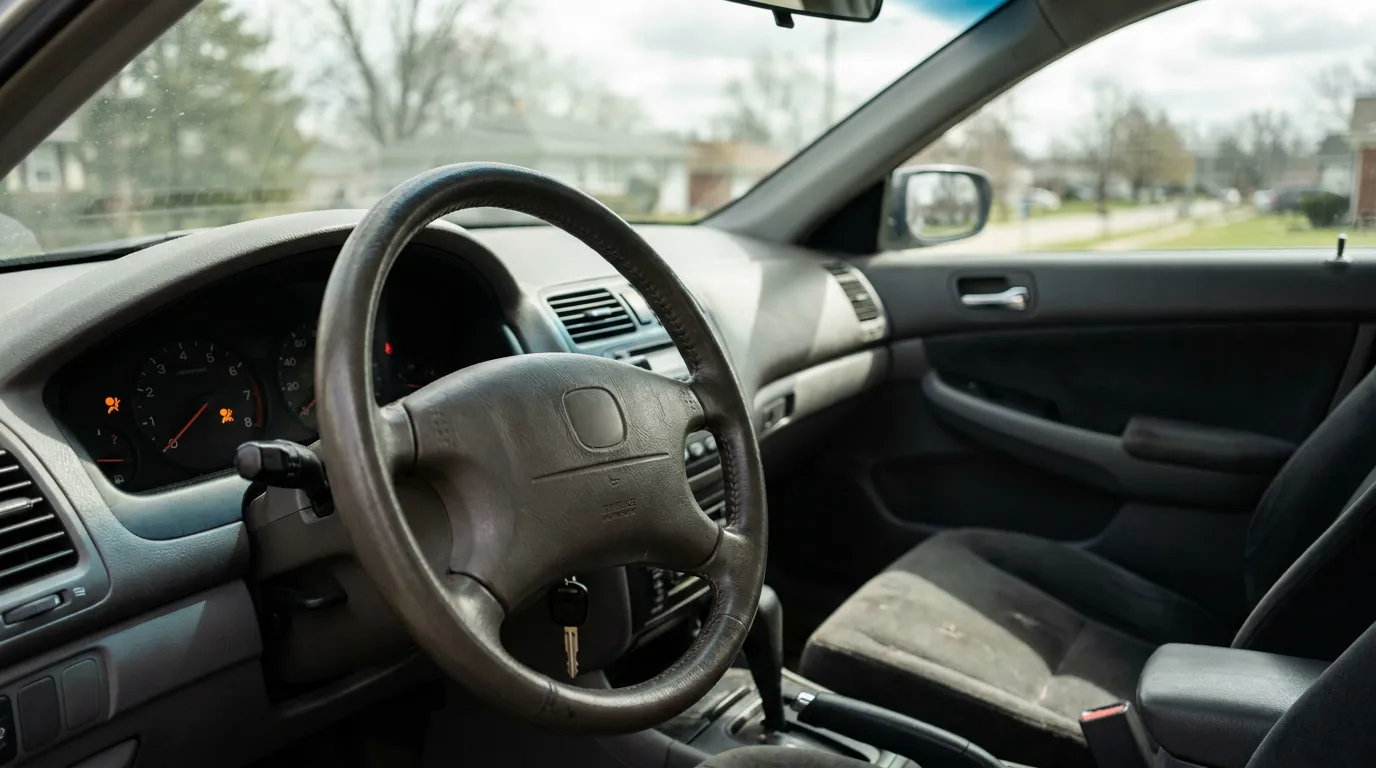
When a Safety Device Fails: Understanding Fault After an Undeployed Airbag in Dayton
Key Takeaways: When an airbag fails to deploy in a Dayton crash, responsibility may fall on several parties, including the vehicle manufacturer, the component or inflator maker, a distributor or supplier, a dealership, a repair shop that improperly serviced or disabled the system, and the driver who caused the collision. Ohio’s Products Liability Act treats "manufacturers" and "suppliers" differently, so each party’s exposure may depend on its role in the chain. These claims typically involve two inquiries: who caused the crash, and whether a defect made the injuries substantially worse under an enhanced injury or crashworthiness theory. Proving a defect generally requires airbag control module data, accident reconstruction, and biomechanical analysis, making vehicle preservation critical. Ohio caps noneconomic damages under Ohio Rev. Code § 2315.18 and sharply limits punitive damages under § 2315.21, while economic losses generally are not capped the same way. A two-year statute of limitations typically applies under Ohio Rev. Code § 2305.10, a ten-year statute of repose may apply to product claims, and claims against government entities follow separate procedural requirements.
When an airbag does not deploy in a serious Dayton collision, liability may extend well beyond the driver who caused the crash. Under Ohio’s product liability framework, the vehicle manufacturer, the airbag or sensor component maker, a distributor, a repair shop that reinstalled a system improperly, or the dealer who sold the vehicle may share responsibility. Product claims are generally governed by the Ohio Products Liability Act, which abrogates most common-law product liability causes of action, so defect theories are typically pleaded under the statute, while claims such as negligent repair or breach of warranty may proceed separately depending on the facts.
If you or a loved one suffered severe injuries in a crash where the airbag never activated, The Attkisson Law Firm can review what happened and explain your options under Ohio law. Call 937-400-0000 or contact us now to discuss your situation.
Why Airbag Failure to Deploy Crash Injuries Raise Different Legal Questions
Airbag failure to deploy crash injuries typically involve two separate liability inquiries. The first addresses who caused the collision, a traditional negligence analysis built on duty, breach, causation, and damages. The second asks whether a defect in the restraint system made the resulting injuries substantially worse than they otherwise would have been.
That second inquiry is often described as an enhanced injury or crashworthiness theory. Under Ohio’s statutory framework, a design defect claim may be evaluated through a risk-benefit analysis, with consumer expectations considered as one factor rather than a standalone test. Not every non-deployment reflects a defect, since many systems are engineered to remain inactive in low-speed impacts, rear-end collisions, or certain rollovers.
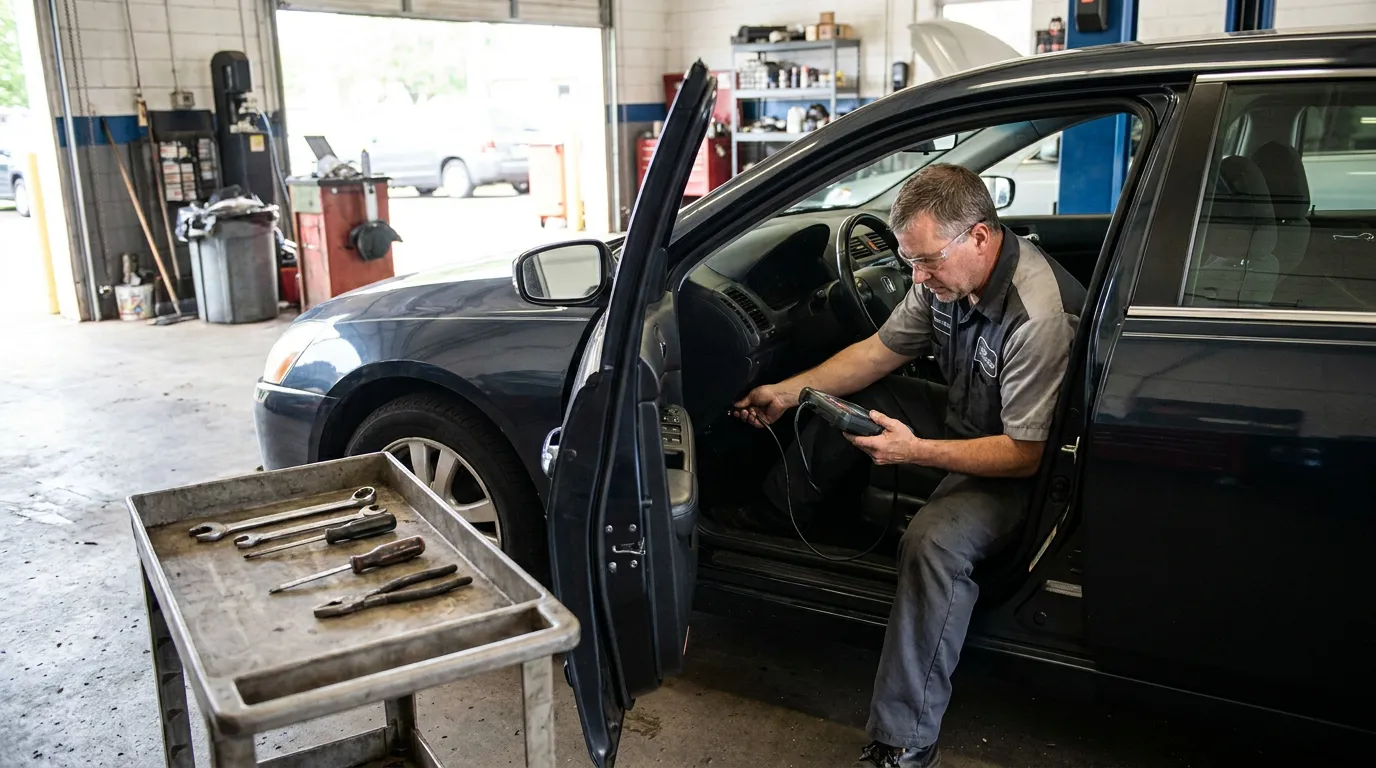
Establishing a defect generally requires technical proof rather than assumption. The airbag control module often stores crash data, including impact severity and whether a deployment command was issued. Preserving the vehicle in its post-crash condition is frequently one of the most important early steps, because repairs or salvage disposal can eliminate the evidence a claim depends on.
\u{1F4A1} Pro Tip: Before authorizing any repair or releasing a vehicle to an insurer or salvage yard, ask in writing that the vehicle and its control module be preserved. Once the vehicle is gone, reconstructing a defect claim can become significantly harder.
Identifying the Parties Who May Bear Responsibility
Ohio’s Products Liability Act, codified at Ohio Rev. Code § 2307.71 et seq., distinguishes between "manufacturers" and "suppliers," and courts may assess liability exposure differently for each. A manufacturer generally may face liability for defects in manufacture, design, inadequate warning, or nonconformance with a representation, while a supplier’s exposure under § 2307.78 is typically narrower and may depend on whether the supplier acted negligently, made its own representations, or falls within a statutory circumstance treating it as a manufacturer.
That distinction can matter enormously when a safety device fails. The automaker that designed the restraint system, the component manufacturer that produced the inflator or crash sensor, and the entity that sold or distributed the part may each occupy a different position in the statutory framework. Ohio courts have grappled with where modern sellers fall within these categories, and legal scholars analyzing the Ohio Supreme Court’s decision in Stiner v. Amazon.com have examined how the "supplier" definition applies to entities that facilitate sales without manufacturing goods.
Potentially Liable Parties in an Ohio Vehicle Defect Claim
| Party | Typical Basis for Liability | Common Defense Raised |
|---|---|---|
| Vehicle manufacturer | Design defect or failure to warn in the restraint system | Airbag performed as designed for the impact type |
| Component or inflator manufacturer | Manufacturing defect in the sensor, inflator, or module | Defect originated elsewhere in the assembly |
| Distributor or supplier | Supplier liability under Ohio Rev. Code § 2307.78 | Sealed container or no knowledge of defect |
| Repair shop or installer | Negligent repair, reinstallation, or disabled system | Work unrelated to the non-deployment |
| At-fault driver | Negligence causing the underlying collision | Comparative fault of the injured party |
How Component Suppliers Fit Into the Chain
Component manufacturers can face claims when the specific part they produced was defective and contributed to the failure. Sensors, control modules, inflators, and wiring come from different companies, and a fault in any one may prevent deployment. Determining which company produced which component often requires discovery of build records and supplier contracts.
Ohio courts may evaluate whether the component was defective when it left the supplier’s control. If the part was later modified, damaged, or improperly installed, responsibility may shift toward a different party. These determinations are fact-intensive and rarely resolved without technical analysis.
When Dealers and Repair Facilities Enter the Picture
A dealership or repair facility may face exposure if it disabled, improperly serviced, or failed to address a known airbag issue. Recall history may be relevant, since millions of vehicles have been subject to airbag-related recalls, though a recall alone does not establish that a specific vehicle’s system was defective. If a facility represented that recall work was completed when it was not, that may support a claim.
Prior collision history also may matter. A vehicle with a previously deployed airbag replaced by a counterfeit or non-functioning module may present a different theory than a factory defect. If you are uncertain how these pieces fit together, it makes sense to consult a lawyer before the trail of documentation goes cold.
Proving Causation Between the Defect and the Injuries
Ohio plaintiffs generally must show not only that a defect existed but that it was a proximate cause of the harm or of enhanced injury. In enhanced injury cases, this often means demonstrating what injuries would likely have occurred had the airbag deployed properly, compared to what actually happened. Biomechanical and accident reconstruction analysis commonly plays a central role, and expert testimony is generally required.
Defendants frequently argue the injuries would have occurred regardless of deployment, or that seat belt use, occupant positioning, or impact angle explains the outcome. Under Ohio’s comparative fault statute, Ohio Rev. Code § 2315.33, a plaintiff’s recovery is reduced by their share of fault and barred entirely if that share exceeds fifty percent, so anticipating these arguments early tends to shape how evidence is gathered.
Medical documentation connecting injury patterns to the absence of restraint can be important. Facial trauma, sternum injuries, traumatic brain injuries, and cervical spine damage sometimes reflect the kind of unrestrained forward movement an airbag is designed to reduce. Consistent treatment records may help establish that link, though none guarantee a particular outcome.
Damages Ohio Law Allows and the Limits That May Apply
Ohio recognizes both economic and noneconomic damages in tort actions, but noneconomic recovery is subject to statutory limits in many cases. Ohio Rev. Code § 2315.18, effective 4-7-2005, caps noneconomic damages in most tort actions at the greater of $250,000 or three times economic loss, subject to overall ceilings of $350,000 per plaintiff and $500,000 per occurrence, with exceptions removing the cap for permanent and substantial physical deformity, loss of a limb or bodily organ system, or permanent physical functional injury preventing independent self-care. Section 2315.18(A) defines "tort action" broadly enough to encompass product liability claims, including those alleging a defective airbag system.
Economic damages are generally not subject to the same statutory ceiling. These typically include medical expenses, future care costs, lost wages, and diminished earning capacity, and often represent the largest measurable component of a severe injury claim.
Punitive damages are available in Ohio only under a demanding standard. Under Ohio Rev. Code § 2315.21(C), punitive damages may not be awarded unless the plaintiff proves by clear and convincing evidence that the defendant acted with malice or aggravated or egregious fraud, or that the defendant as principal or master knowingly authorized, participated in, or ratified actions or omissions of an agent or servant that so demonstrate, and compensatory damages must also be determined first under the statute’s bifurcated trial structure. Section 2315.21(D) further limits punitive damages to no more than two times the compensatory damages awarded, with a lower alternative limit of ten percent of net worth up to $350,000 when the defendant is an individual or a qualifying small employer.
Ohio also structures these trials differently when punitive damages are claimed. Ohio Rev. Code § 2315.21(B) provides that upon the motion of any party, the trial court shall bifurcate the proceeding so compensatory damages are determined first, followed by a separate phase addressing punitive damages. Anyone weighing an airbag injury claim in Dayton should understand that these caps and procedures may directly affect realistic case valuation.
How Insurers Must Handle Your Claim Under Ohio Regulations
After liability is identified, Ohio separately regulates how the responsible party’s insurer must handle the resulting claim. Ohio Admin. Code Chapter 3901-1 addresses unfair and deceptive acts or practices in the business of insurance within the state. Specifically, Ohio Admin. Code 3901-1-07 addresses unfair trade practices, and Ohio Admin. Code 3901-1-54 addresses standards for the prompt, fair, and equitable settlement of insurance claims arising under policies issued to Ohio residents.
This regulatory framework is administrative and distinct from a civil lawsuit. Ohio courts have generally held that these insurance regulations do not create a private right of action, and a regulatory complaint to the Ohio Department of Insurance does not substitute for filing a claim in court or extend any filing deadline. Injured people sometimes assume the two processes are connected, which can create costly confusion.
Practical steps that often protect an airbag injury claim in Dayton include:
- Preserving the vehicle and requesting that the airbag control module data be downloaded before repairs
- Photographing the interior, including the undeployed airbag cover, seat belts, and any contact damage
- Obtaining the vehicle identification number and checking open recall status
- Keeping every medical record, imaging study, and work absence document
- Declining to give a recorded statement about defect theories before understanding the technical evidence
\u{1F4A1} Pro Tip: Insurers sometimes total a vehicle quickly after a severe crash. Taking possession of the vehicle, or securing a written preservation agreement, may be more valuable to your claim than the settlement offered for the vehicle itself.
Ohio Filing Deadlines and Why Timing Matters
Ohio generally applies a two-year statute of limitations to bodily injury actions, including product liability claims, under Ohio Rev. Code § 2305.10. Missing that deadline typically bars the claim entirely, regardless of how strong the underlying evidence may be. Because defect cases often require substantial technical development, waiting until the deadline approaches can seriously limit what a legal team is able to do.
Ohio law recognizes limited exceptions, but courts generally interpret them narrowly. Discovery rules, tolling for minors under Ohio Rev. Code § 2305.16, and related doctrines may apply in certain circumstances, though none should be assumed automatic. Ohio also has a ten-year statute of repose for product liability claims under Ohio Rev. Code § 2305.10(C), which may bar actions brought more than ten years after a product was delivered to its first owner, subject to statutory exceptions such as express written warranties of longer duration.
Claims involving a government entity generally follow different procedural requirements. Claims against political subdivisions are governed by Ohio Rev. Code Chapter 2744 and are generally subject to a two-year limitations period, while claims against the state must typically be filed in the Ohio Court of Claims under Chapter 2743, and some entities or contracts impose their own notice requirements. Anyone facing overlapping deadlines should seek guidance promptly rather than relying on general timelines.
Frequently Asked Questions
1. Does a non-deploying airbag automatically mean the vehicle was defective?
Not necessarily. Airbag systems are generally calibrated to deploy only in certain impact types and severities, so non-deployment in a low-speed or rear-impact crash may reflect intended design. A defect analysis generally requires reviewing control module data against deployment thresholds.
2. Can I still recover if the other driver caused the crash?
Potentially yes. Ohio law may allow claims against both the at-fault driver for causing the collision and a manufacturer or supplier for injuries worsened by the restraint failure. These theories can, under certain circumstances, be pursued in the same action, with any recovery reduced by a plaintiff’s own comparative fault.
3. What if my vehicle was already sold for salvage?
Recovery may become more difficult but is not necessarily impossible. Dealer records, salvage yard documentation, photographs, repair estimates, and recall history may still support a claim, though the absence of the vehicle may strengthen defense arguments, including spoliation arguments if the loss was avoidable. Acting quickly to locate the vehicle is generally advisable.
4. Are there limits on what I can recover in Ohio?
Generally yes, for noneconomic damages in most tort actions under Ohio Rev. Code § 2315.18, with exceptions removing the cap for catastrophic injuries defined by the statute. Punitive damages face separate restrictions under Ohio Rev. Code § 2315.21(D). Economic losses generally are not capped the same way.
5. How do I know which company made my airbag system?
Most drivers do not know, and that information usually emerges through formal discovery. Build sheets, supplier agreements, and part numbers obtained from the manufacturer typically identify the responsible entities during litigation.
Moving Forward After a Restraint System Failure
Determining who bears responsibility when an airbag does not deploy generally requires careful analysis of Ohio’s statutory distinctions between manufacturers and suppliers, technical evaluation of the restraint system, and attention to damage limitations under Ohio Rev. Code §§ 2315.18 and 2315.21. Outcomes may depend on specific facts, the quality of preserved evidence, and how quickly the investigation begins. No two claims unfold the same way, and general information cannot substitute for a review of your circumstances.
If a restraint system failure contributed to serious injuries, The Attkisson Law Firm handles airbag failure to deploy crash injuries matters for people throughout the Dayton area. Reach the firm at 937-400-0000, visit attkissonlawfirm.com, or schedule a consultation to have your situation reviewed.
Disclaimer: This content is for informational purposes only and is not legal advice. Every case is unique, and results may vary. Consult an attorney about your specific circumstances.