
When a Brake Job Goes Wrong and a Life Is Lost
Key Takeaways: When a bad brake repair causes a fatal truck crash in Ohio, more than one party may be liable, including the mechanic or repair shop, the trucking company, and sometimes a parts maker or trailer owner. Ohio Rev. Code § 4513.20 sets brake standards for stopping, holding, and upkeep, and falling short of them can be strong evidence of negligence. Federal rules at 49 CFR Parts 393 and 396 also require motor carriers to inspect and maintain brakes, so a trucking company may be liable even if it didn’t do the repair. Key evidence includes repair orders, maintenance files, inspection records, engine data, and the brake parts themselves, which families should ask to have preserved right away. Under O.R.C. § 2125.02, the personal representative of the estate generally must file a wrongful death claim within two years of the death, for the benefit of the surviving spouse, children, and parents, and sometimes other next of kin. Ohio generally divides fault by percentage, and a defendant found 50 percent or less at fault generally pays only its share of noneconomic damages, so naming every responsible party may matter.
When a bad brake repair leads to a fatal truck crash, more than one party may be liable. The mechanic or repair shop, the trucking company that had to keep the truck safe, and sometimes a parts maker may all share the blame under Ohio law. A truck brake failure is often not a random event. It may follow missed inspections, poor adjustments, or careless repairs.
If you lost a loved one in a truck crash in Dayton, you do not have to face these questions alone. The Attkisson Law Firm helps families find out what went wrong and who should be held responsible. Call 937-400-0000 or contact us now to talk about your family’s options.
How Ohio Law Defines Safe Truck Brakes
Ohio sets specific brake standards for vehicles on its highways. Courts may use these rules to help define "reasonable care." In Ohio, breaking a specific safety law can sometimes count as negligence by itself (negligence per se), though the family must still show that the violation caused the death.
Stopping, Holding, and Backup Requirements
Under Ohio Rev. Code § 4513.20(A)(1), every motor vehicle other than a motorcycle must have brakes that can control it and stop and hold it. The brakes must have two separate ways to apply them, each working on at least two wheels. If the two systems are linked, the failure of one part cannot leave the vehicle without brakes on at least two wheels. Ohio Rev. Code § 4513.20(A)(7) adds that parking brakes generally must hold the vehicle on any grade, under any load.
Ohio also sets a measurable stopping standard. Under Ohio Rev. Code § 4513.20(A)(9)(a)-(b), a vehicle or combination with brakes on all wheels must be able to stop within 30 feet from 20 mph on dry, smooth, level pavement free of loose material. One without brakes on all wheels must stop within 40 feet. Crash experts can compare how the truck actually braked against these Ohio brake equipment rules, keeping in mind that real crash conditions rarely match the law’s test conditions.
Rules for Tractor-Trailers and Combinations
Tractor-trailers face more rules because their brake systems are more complex. Under Ohio Rev. Code § 4513.20(A)(4)(a), trailers and semitrailers that weigh 2,000 pounds or more empty must generally have brakes the driver can apply from the cab. Those brakes must also apply automatically if the trailer breaks away from the truck. Ohio Rev. Code § 4513.20(A)(6) requires the rearmost brakes in a combination to apply at about the same time as the towing vehicle’s brakes, or before them. Badly adjusted or repaired brakes can break this rule and help cause jackknifes or rear-end crashes.
Ohio Rev. Code § 4513.20(A)(10) creates an ongoing duty to maintain brakes. All brakes must be kept in good working order and adjusted to work as evenly as possible on both sides of the vehicle. This duty is often the core of a negligent brake repair claim.
Who May Share Responsibility for a Truck Brake Failure
Several parties may be legally responsible, depending on who worked on the brakes and who had a duty to keep them safe. Under O.R.C. § 2125.01, a family may bring a wrongful death claim against any party who would have been liable if the injured person had lived and sued.
The Repair Shop or Mechanic
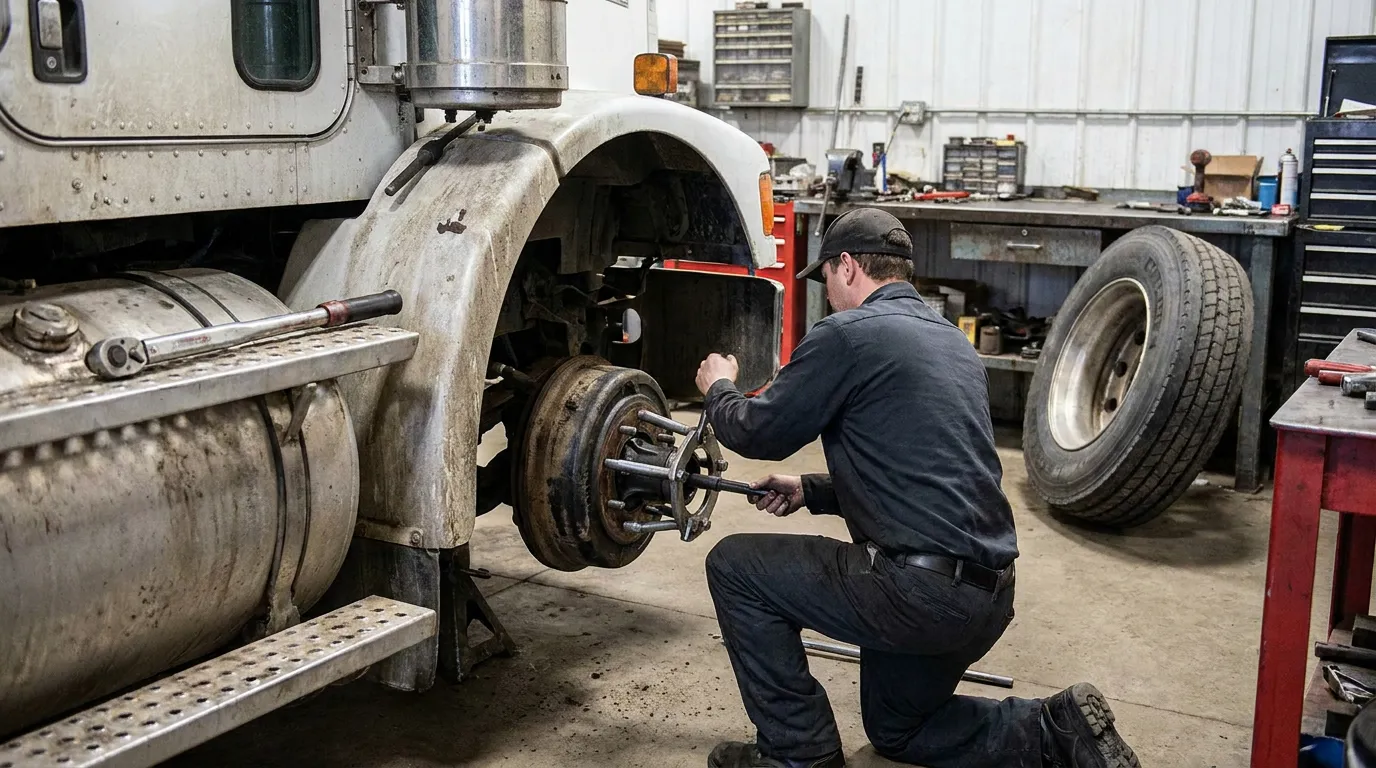
A mechanic’s liability generally depends on whether the work met the care a reasonably careful mechanic would use. A mechanic who installs the wrong parts, leaves slack adjusters out of adjustment, or signs off on an unfinished job may be negligent. Repair shops can also be liable for careless work by their employees.
The Trucking Company
Motor carriers usually have their own duty to inspect, repair, and maintain their trucks. Federal rules at 49 CFR Parts 393 and 396 set brake equipment standards and require carriers to inspect, repair, and maintain the trucks they control on a regular schedule. Courts may treat a broken safety rule as evidence of negligence, or as negligence by itself, depending on the rule and the facts. A carrier generally cannot pass its maintenance duty to someone else, so one that hires a poor shop or ignores drivers’ brake complaints may still be liable.
Other Potentially Liable Parties
Sometimes the problem goes beyond the repair itself. A defective brake part may support a product liability claim under Ohio’s Product Liability Act, which begins at Ohio Rev. Code § 2307.71. Ohio Rev. Code § 2307.78 limits claims against suppliers who did not make the part. Trailer owners and loading companies may also be involved.
| Potential Defendant | Common Basis for Liability |
|---|---|
| Mechanic or repair shop | Poor adjustment, wrong parts, unfinished repairs |
| Trucking company | Failing to inspect, ignoring defects, weak maintenance programs |
| Parts maker | Defective brake parts |
| Trailer owner or lessor | Failing to maintain trailer brakes |
Ohio law also generally divides fault among multiple parties. Under Ohio Rev. Code §§ 2307.22 and 2307.23, the jury gives each party a percentage of fault. A defendant more than 50 percent at fault can be held liable for all economic damages, while each defendant generally pays only its share of noneconomic damages. For more, see our article on improper truck maintenance claims.
Evidence That Can Prove Negligent Brake Repair
Brake cases often turn on evidence, and the defendants may hold much of it. Some federal records only have to be kept for a short time, so families often need to act quickly.
Key evidence often includes:
- Repair orders, invoices, and parts receipts from the shop
- The carrier’s maintenance and inspection files
- PUCO inspection records under Ohio Rev. Code § 4513.02(B)(2)
- Roadside inspection results ordered by State Highway Patrol troopers under Ohio Rev. Code § 4513.02(B)(1)
- FMCSA safety data showing a carrier’s history of brake violations
- Engine computer data showing speed and braking before the crash
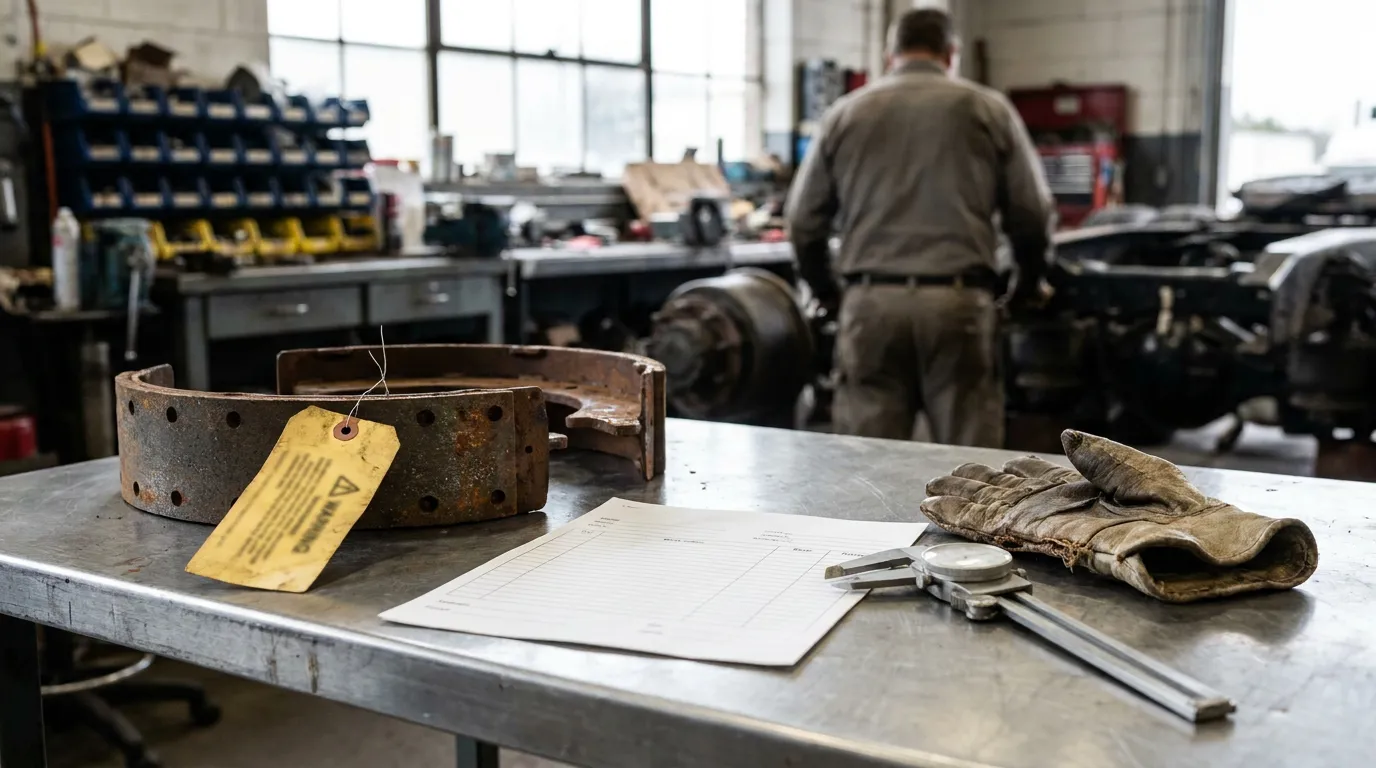
- The physical brake parts, saved for testing
Ohio Rev. Code § 4513.02(B)(1) lets a State Highway Patrol trooper stop a vehicle and require it to be inspected and tested, and the law lists brakes by name. Those results, along with PUCO inspection records, can help show whether anyone knew about problems with the truck before the crash.
💡 Pro Tip: Ask that no one repair, scrap, or release the truck and its brake parts until experts have examined them. A formal letter sent early asking the other side to save evidence can help prevent the loss of irreplaceable proof.
Pursuing a Fatal Truck Accident Wrongful Death Claim in Ohio
Ohio law sets the rules for a fatal truck accident wrongful death claim. Knowing them early helps families avoid mistakes that could limit recovery.
Who Files and Who Benefits
Under O.R.C. § 2125.02, the personal representative of the estate brings the claim. The claim is for the sole benefit of the surviving spouse, children, and parents, who the law presumes have suffered damages, and other next of kin. Family members usually do not each file their own lawsuit.
Damages Families May Seek
Ohio Rev. Code § 2125.02 lists the types of wrongful death damages families may recover. These include loss of support, services, companionship, and expected inheritance, and mental anguish suffered by the surviving spouse, children, parents, or next of kin. Reasonable funeral and burial costs may also be recoverable. The person’s own medical bills and pain before death are usually pursued through a separate survival claim.
Filing Deadlines
Under O.R.C. § 2125.02(F)(1), a wrongful death lawsuit generally must be filed within two years after the death. A few exceptions exist, and some claims, such as certain product liability claims, also face separate time limits. Missing the deadline may end the claim entirely.
Common Obstacles Families Face After a Brake-Failure Crash
Families often see defendants blame each other. The carrier may blame the shop, the shop may blame the driver, and the parts maker may blame both. Insurers may make early, low offers before anyone knows who was at fault.
Shared fault rules can also come into play. Under Ohio Rev. Code § 2315.33, the family cannot recover if the person who died was more at fault than all defendants combined, and any smaller share of fault reduces the damages. An experienced truck brake failure lawyer can push back with technical evidence. Learn more about how truck brake failure lawyer representation works at our firm.
💡 Pro Tip: Avoid giving recorded statements to any trucking company insurer before you understand your rights.
Frequently Asked Questions
1. Can I sue the repair shop if it was not the trucking company’s employee?
Yes, in many cases you may name an independent repair shop as a defendant. Liability depends on proof that the shop owed a duty, the repair fell below the expected level of care, and that failure caused the crash.
2. How do we prove the brakes caused the crash?
Proof usually comes from inspecting the brakes, reviewing records, and rebuilding how the crash happened. Investigators may compare braking to Ohio Rev. Code § 4513.20(A)(9) and federal brake rules, along with expert testing, engine data, and witness accounts.
3. How long does my family have to file a wrongful death claim?
Generally, two years from the date of death under O.R.C. § 2125.02(F)(1). Exceptions are few, and some claims face other deadlines too.
4. What if more than one party was at fault?
Ohio law generally lets the jury divide fault among multiple defendants. Under Ohio Rev. Code §§ 2307.22 and 2307.23, defendants 50 percent or less at fault generally pay only their own share of noneconomic damages. Naming every responsible party can matter for full recovery.
5. Do federal trucking rules apply in an Ohio case?
Federal rules such as 49 CFR Parts 393 and 396 apply to interstate motor carriers, and Ohio has adopted many of them for carriers that operate only within the state. Violations may support a negligence claim, depending on the facts. Ohio law generally governs the wrongful death claim itself.
Holding the Right Parties Accountable
A fatal truck brake failure often traces back to choices made long before the crash. Ohio law sets detailed brake standards, requires ongoing maintenance, and may let families bring wrongful death claims against parties whose negligence helped cause the death. Strict deadlines and evidence that can vanish quickly make early action important.
Your family deserves real answers about what happened. Reach out to The Attkisson Law Firm to discuss your loss with a team trusted by clients across the Dayton area. Call 937-400-0000 or schedule your consultation today.
Disclaimer: This content is for informational purposes only and is not legal advice. Every case is unique, and results may vary. Consult an attorney about your specific circumstances.