
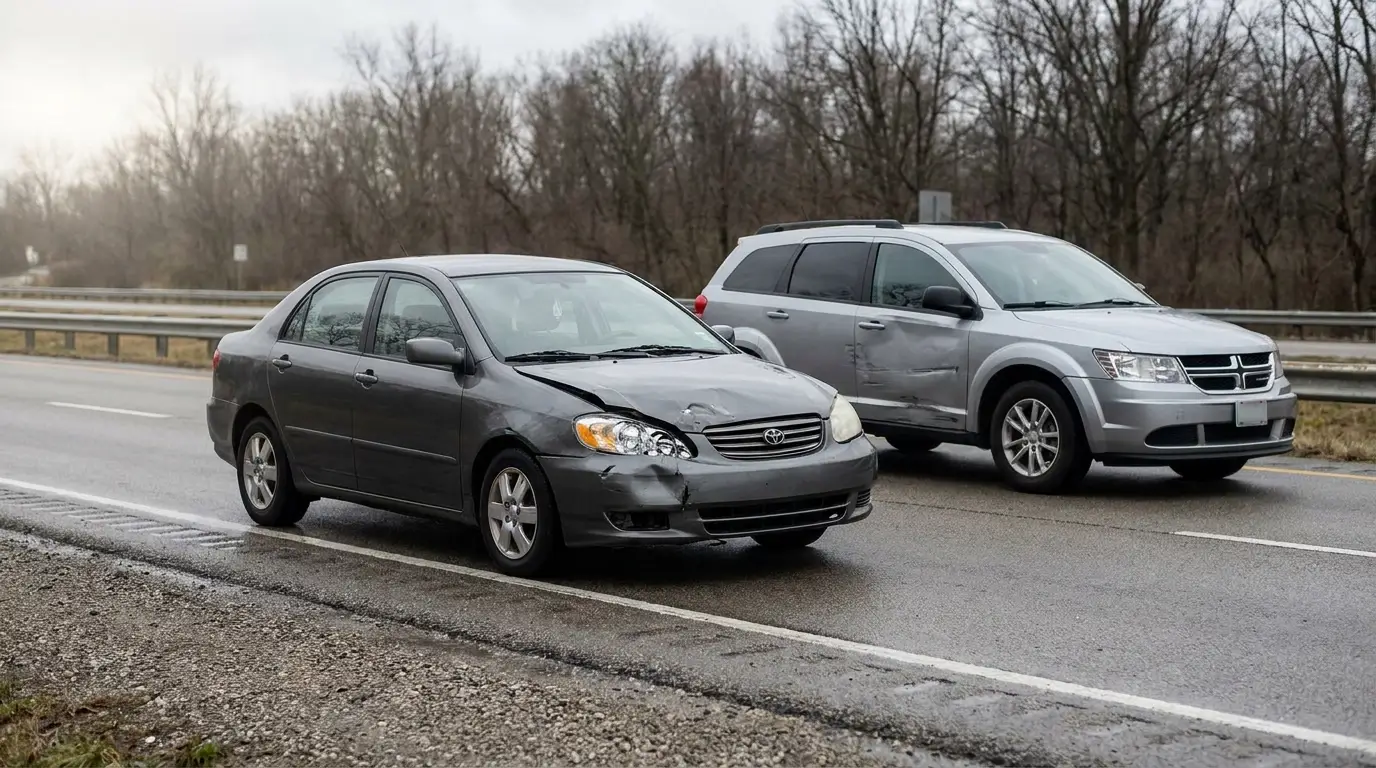
How Comparative Fault Works in Ohio and What It Means for Your Dayton Injury Claim
If you were hurt in a car accident in Dayton but the insurance company says you were partly to blame, you may wonder whether you can still recover compensation. The answer is usually yes. Ohio follows a modified comparative negligence model with a 51 percent bar, meaning you can pursue a Dayton injury claim even if you share some responsibility. Your compensation is reduced by your percentage of fault, but you’re not barred from recovery unless your fault reaches 51 percent or more. Understanding comparative fault in Ohio can make the difference between accepting a lowball settlement and securing full compensation for serious injuries.
If you have questions about how shared fault may affect your case, The Attkisson Law Firm is here to help. Call 937-400-0000 or reach out online to discuss your situation.

The Basics of Negligence and Why Fault Matters in Dayton Auto Accidents
Before you can understand comparative fault, it helps to know what negligence means under Ohio law. To establish a negligence claim, a plaintiff must prove four elements: duty of care, breach of that duty, causation, and damages. When a driver runs a red light and causes a collision, they’ve breached their duty of care to other motorists.
The concept of fault becomes complicated when both parties may have contributed to a crash. Perhaps you were driving slightly over the speed limit when another driver, distracted by their phone, ran a stop sign and struck your vehicle. The insurance company may argue your speeding contributed to the collision’s severity. This is where Ohio negligence law on comparative fault shapes how much Ohio car accident compensation you may receive.
💡 Pro Tip: After any accident, preserve all evidence. Dashcam footage, witness information, photos, and the police report can establish the other party’s greater share of fault and protect your claim.
Ohio’s Modified Comparative Negligence Rule: The 51 Percent Bar
What the Statute Says
Ohio’s comparative fault rule is codified in Ohio Revised Code § 2315.33, which provides that a plaintiff’s contributory fault does not bar recovery as long as their fault was not greater than the combined tortious conduct of all other persons. If you are 50 percent or less at fault, you can still recover damages. If you’re found 51 percent or more at fault, you’re completely barred from recovery.
Your damages are reduced proportionally by your share of fault. If a jury determines your total damages for a spinal injury are $500,000 but finds you were 20 percent at fault, your recovery would be reduced to $400,000. The reduction applies to all compensatory damages, including medical expenses, lost wages, and pain and suffering.
How Ohio Compares to Other States
Not every state handles fault the same way. Most states now use comparative negligence rather than the older contributory negligence doctrine. Under pure contributory negligence, still used in a handful of jurisdictions, a plaintiff who is even 1 percent at fault may be completely barred from recovery. Ohio and over 30 other states have adopted modified comparative negligence.
| System | How It Works | States Using It |
|---|---|---|
| Pure Contributory Negligence | Any fault by the plaintiff bars all recovery | A small number of states |
| Pure Comparative Negligence | Plaintiff recovers regardless of fault percentage, reduced by their share | About a dozen states |
| Modified Comparative Negligence (51% Bar) | Plaintiff recovers if fault is 50% or less; barred at 51%+ | Ohio and many others |
💡 Pro Tip: Insurance adjusters sometimes try to push your fault percentage past 50 percent to eliminate the claim entirely. Don’t give a recorded statement or accept blame without first speaking to a car accident attorney in Dayton.
How Comparative Fault Is Applied in a Dayton Car Crash Case
The Affirmative Defense Requirement
Comparative fault doesn’t come into play automatically. Under Ohio Revised Code § 2315.32, contributory fault may be asserted as an affirmative defense to a tort claim. The defendant must raise this defense, and it must be determined that the plaintiff was contributorily at fault and that such fault was a proximate cause of the injury. If the defense isn’t properly raised, the question may not reach the jury.
Multiple At-Fault Parties
Many serious Dayton car accidents involve more than two parties. When contributory fault has been established and the plaintiff is entitled to recover from more than one party, Ohio Revised Code § 2315.36 directs the court to enter judgment pursuant to Ohio Revised Code § 2307.22. In a multi-vehicle pileup on I-75, fault may be distributed among several drivers, with each party’s share determined individually.
💡 Pro Tip: If multiple parties contributed to your crash, each defendant’s insurance carrier may try to shift blame to the others. Early investigation can help identify all liable parties and prevent gaps in your recovery.
Critical Deadlines: Ohio’s Statute of Limitations for Car Accident Attorney in Dayton Cases
Even if you have a strong claim, missing the filing deadline can end your case before it begins. Under Ohio Revised Code § 2305.10(A), an action for bodily injury must generally be brought within two years after the cause of action accrues. Courts generally interpret exceptions narrowly, so don’t assume tolling or discovery rules will automatically extend your time.
Ohio law also includes a statute of repose for product liability claims. If a defective vehicle component contributed to your injuries, Ohio Revised Code § 2305.10(C)(1) provides that no product liability cause of action may accrue against the manufacturer or supplier later than ten years from delivery to the first purchaser.
💡 Pro Tip: Don’t wait until the deadline is near. Evidence degrades, witnesses become harder to locate, and medical records are easier to connect to the accident when your claim is pursued promptly.
What a Partial Fault Car Crash in Dayton Looks Like in Practice
Consider a real-world scenario to see how shared fault plays out. Suppose you’re driving through an intersection at dusk without your headlights on. Another driver, who is texting, fails to yield and strikes your vehicle. You suffer multiple fractures requiring surgery. The jury may find the texting driver 75 percent at fault and you 25 percent at fault for driving without headlights. If your total damages are $400,000, your recovery would be reduced to $300,000.
The outcome changes dramatically if fault shifts. If the jury found you 51 percent at fault, you would recover nothing. This is why evidence supporting each party’s share of fault is critical. Working with a Dayton auto accident lawyer who understands how to build and present evidence of the other party’s greater fault is essential.
Protecting Your Claim When the Insurer Blames You
Insurance companies have a financial incentive to assign you as much fault as possible. In a partial fault car crash in Dayton, the at-fault driver’s insurer may dispute the police report, question your driving behavior, or highlight minor details to inflate your percentage of responsibility. Their goal may be to push your fault above 50 percent and eliminate their obligation entirely.
You can take steps to protect your claim from the start:
- Call law enforcement and obtain an official accident report
- Seek medical attention immediately, even if injuries seem minor
- Avoid any admission of fault at the scene or with adjusters
- Document everything, from vehicle damage to road conditions and traffic signals
💡 Pro Tip: If an insurance company contacts you with a quick settlement offer after a serious accident, treat it with caution. Early offers rarely account for the full extent of severe injuries or future lost earning capacity.
How Comparative Negligence Affects Your Car Accident Attorney in Dayton Strategy
Understanding comparative fault shapes every decision in your case, from the initial demand to trial preparation. Your legal team must anticipate defense arguments about your conduct and prepare evidence to minimize your assigned percentage of fault. For catastrophic injuries, even a 5 or 10 percent shift in fault allocation can mean tens of thousands of dollars in additional or lost compensation. You can learn more by reading about comparative negligence in Dayton car accidents.
Ohio’s framework is more equitable than the old contributory negligence system, but it still carries real risks. The 51 percent bar means your right to compensation has a hard cutoff. Every piece of evidence, witness statement, and accident report detail matters.
Frequently Asked Questions
1. Can I still recover compensation if I was partially at fault for my car accident in Dayton?
Yes. Under Ohio Revised Code § 2315.33, you may recover damages as long as your fault doesn’t exceed 50 percent. Your total compensation will be reduced by your percentage of fault.
2. What happens if I am found 51 percent or more at fault?
Under Ohio’s modified comparative negligence rule, you would be completely barred from recovering any compensation. This makes it critical to gather strong evidence showing the other party bore the greater share of responsibility.
3. How long do I have to file a car accident injury claim in Dayton?
Ohio Revised Code § 2305.10(A) generally requires bodily injury claims to be filed within two years. Courts interpret exceptions narrowly, so don’t rely on extensions without specific legal guidance.
4. Who decides my percentage of fault in an Ohio car accident case?
In cases that go to trial, the jury determines each party’s percentage of fault based on the evidence. In settlement negotiations, insurance companies and attorneys argue over fault allocation. The determination depends on the specific facts and documentation available.
5. Can the at-fault driver’s insurance company increase my fault percentage to avoid paying?
Insurance carriers may attempt to assign you a higher percentage of fault to reduce or eliminate their payout. They may dispute evidence or question your actions before the crash. Strong documentation and thorough case preparation are your best defense.
Taking the Next Step to Protect Your Dayton Injury Claim
Ohio’s comparative fault system offers injured individuals a path to compensation even when they share some responsibility for an accident, but the 51 percent bar creates a serious risk that demands careful preparation. Every detail matters, from the police report to medical records to witness testimony. The sooner you understand how fault allocation may affect your recovery, the better positioned you are to protect your rights and pursue compensation for medical bills, lost income, and recovery after a severe injury.
If you or a loved one was seriously hurt in a Dayton car accident and have questions about how comparative fault may affect your claim, The Attkisson Law Firm is ready to help. Call 937-400-0000 or contact us today to discuss your case.