
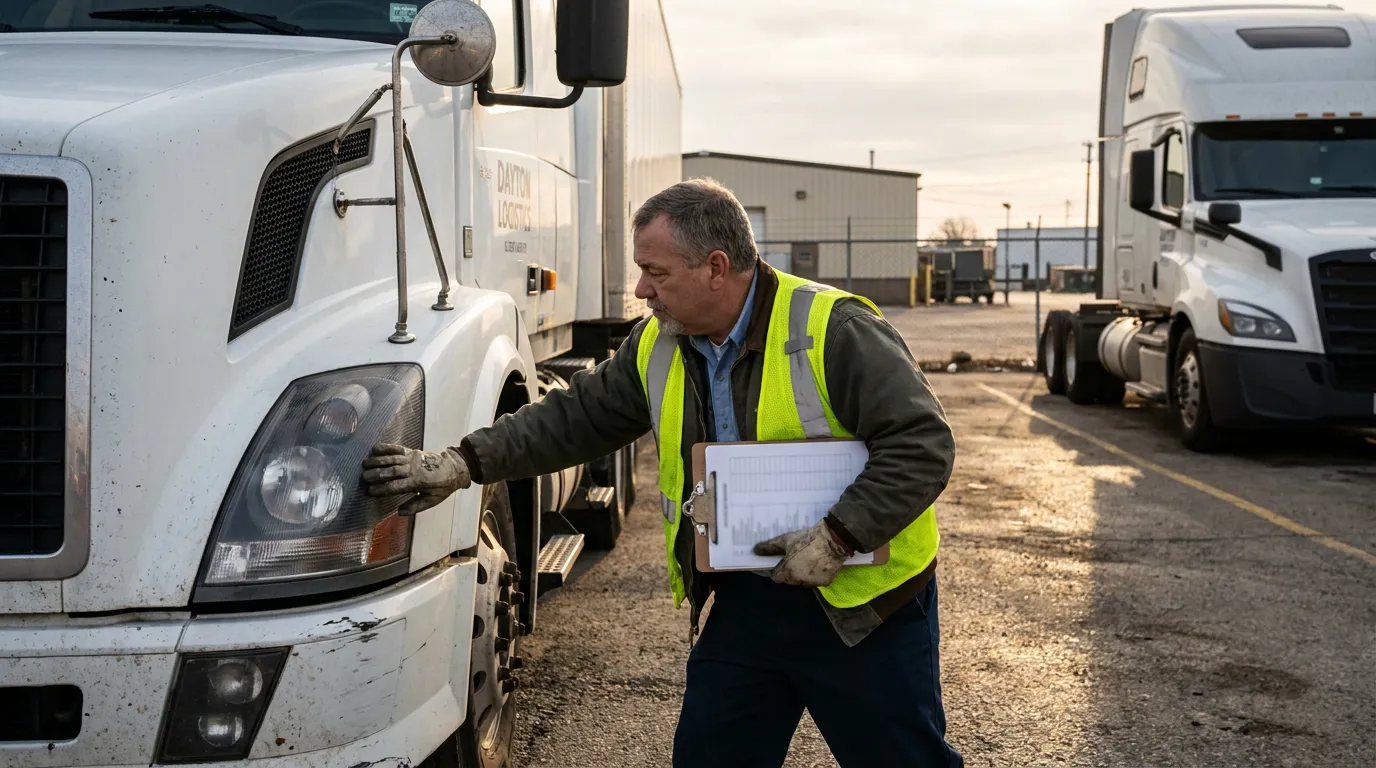
When a Trucking Company’s Own Decisions Put an Unsafe Driver on the Road
Key Takeaways: A negligent hiring claim against a Dayton trucking company seeks to hold the carrier directly responsible for its own alleged carelessness in screening, selecting, or retaining an unfit driver, rather than for the driver’s conduct alone. Unlike vicarious liability under respondeat superior, this direct theory generally requires proof that the company breached its own duty of reasonable care. Ohio’s common-law framework generally requires showing an employment relationship, the driver’s unfitness, the employer’s actual or constructive knowledge, a negligent act by the driver, and a causal link between the hiring decision and the harm. Federal motor carrier rules in 49 C.F.R. Part 391 may inform what a reasonable investigation looks like, and gaps in driver qualification files can supply useful evidence. Related theories such as negligent retention, supervision, and entrustment often accompany the claim. Because Ohio generally allows two years to file most injury and wrongful death claims, and records like ECM data and logs may be lost quickly, early preservation matters.
A negligent hiring claim against a trucking company seeks to hold the carrier responsible for its own alleged carelessness in selecting, screening, or retaining the driver involved in your crash. Rather than focusing only on the driver’s conduct behind the wheel, this theory asks whether the company should have put that person in a heavy commercial vehicle, weighing up to roughly 80,000 pounds, in the first place. For Dayton families facing catastrophic injuries or wrongful death after a collision with a tractor-trailer, that distinction matters, because it may open a direct path to the company’s own conduct and, in some cases, additional insurance coverage.
If you or a loved one suffered serious injuries in a commercial truck collision, The Attkisson Law Firm can review whether the carrier’s hiring practices played a role. Call 937-400-0000 or contact us now to discuss your situation.
How Negligent Hiring Differs From Vicarious Liability
Negligent hiring targets the employer’s own conduct, while vicarious liability targets the employee’s. Under respondeat superior, an employer may generally answer for an employee’s negligent acts committed within the scope of employment, without proof the employer itself acted unreasonably. Negligent hiring is a direct liability theory, meaning the plaintiff generally must show the company itself breached a duty of reasonable care when it hired or retained the driver.
That difference can carry real practical consequences in Montgomery County truck claims. Some carriers admit the driver was acting within the scope of employment, hoping to limit inquiry into their own files. Whether a court permits direct negligence claims to proceed alongside an admitted respondeat superior claim is unsettled and fact-dependent in Ohio, with courts reaching differing results. A Dayton truck accident lawyer can evaluate how that issue may affect the evidence a jury eventually hears.
Why the Distinction Affects What Evidence You See
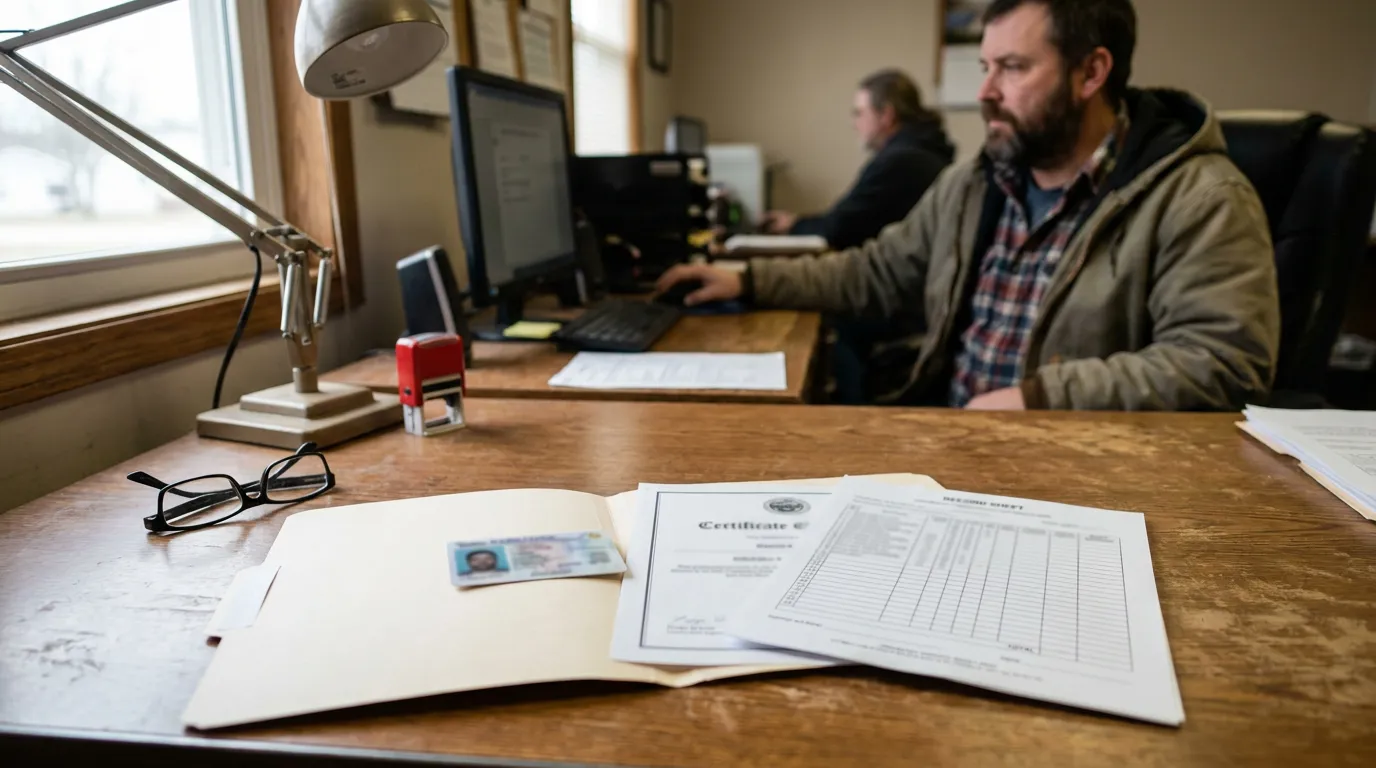
Direct negligence theories may open the door to internal company records. Driver qualification files, applications, prior employer verifications, road test results, and internal safety scoring can all become relevant when the claim concerns the hiring decision itself. Under a pure vicarious liability theory, those documents may be less central, though relevance is ultimately decided by the court. Preserving them early, through a spoliation letter or litigation hold, is often one of the most time-sensitive steps in a case.
Elements of a Negligent Hiring Claim Against a Trucking Company
Ohio generally follows the common-law framework for negligent hiring and retention. Ohio case law and scholarly analysis, including the treatment found in Akron Law Review commentary on employer liability, identify elements an injured plaintiff generally must establish:
- An employment relationship between the carrier and the driver
- The driver’s incompetence or unfitness for the position
- The employer’s actual or constructive knowledge of that incompetence
- An act or omission by the driver causing the plaintiff’s injuries
- A causal connection between the employer’s negligence in hiring or retaining and the harm suffered
Each element is fact-intensive, and none is presumed. Constructive knowledge often turns on what a reasonable inquiry would have revealed, not merely on what the company actually knew. Courts may also consider whether the position created a foreseeable risk of harm to the public, a showing often more straightforward when the job involves operating a commercial vehicle on I-75 or I-70.
The Duty to Investigate Before Handing Over the Keys
An employer’s duty of reasonable care in selection generally scales with the risk the position creates. Doctrinal treatments of the tort, including discussion in the Case Western Reserve Law Review, emphasize that foreseeability of harm to third parties may shape the scope of investigation a reasonable employer should conduct. When the position involves piloting a heavy commercial vehicle through residential corridors and interstate interchanges, the foreseeable harm may be severe injury or death, raising the expected level of pre-hire scrutiny.
In practice, that duty often overlaps with federal motor carrier requirements. Federal regulations generally require motor carriers to maintain a driver qualification file, investigate the applicant’s employment history for the preceding three years, obtain motor vehicle record inquiries from each licensing state, and confirm the driver is qualified and properly licensed. These obligations appear in 49 C.F.R. §§ 391.21, 391.23, 391.25, and 391.51, with drug and alcohol testing requirements in Part 382. A carrier that skipped or rubber-stamped these steps may face both a regulatory violation and evidence supporting a state-law negligent hiring theory, though a regulatory breach alone does not automatically establish civil liability, and whether it’s treated as negligence per se or merely evidence of negligence depends on the court and rule at issue.
Common Red Flags Investigators Look For
Certain patterns in a driver’s history may signal unsafe hiring. Prior positive drug or alcohol screens, a suspended or revoked CDL, a string of preventable collisions, falsified logbooks at a previous carrier, or unverified employment gaps all raise questions about the selection decision. None alone proves a claim, but together they may support an argument that a reasonable carrier would have declined the applicant or imposed additional training.
💡 Pro Tip: Request the crash report and note the carrier’s USDOT number early. Public safety data tied to that number may reveal an inspection and violation history that helps frame whether the company’s hiring practices fit a broader pattern.
Negligent Hiring, Retention, Supervision, and Entrustment
These related theories overlap but are not interchangeable. Plaintiffs’ counsel frequently plead several together because the evidence often supports more than one, and because the timing of the employer’s knowledge may determine which theory fits best.
| Theory | Core Question | Timing of Employer Knowledge |
|---|---|---|
| Negligent hiring | Should the carrier have hired this driver? | Before or at the time of hire |
| Negligent retention | Should the carrier have kept this driver? | After hire, during employment |
| Negligent supervision | Did the carrier reasonably oversee the driver? | Ongoing throughout employment |
| Negligent entrustment | Should the carrier have given this driver this truck? | At the time the vehicle was entrusted |
Federal litigation in Ohio regularly addresses how these theories develop. Motion practice in district court cases, such as the substantive filing docketed as entry 67 in a Northern District of Ohio trucking case, illustrates how courts may evaluate whether direct negligence claims against a carrier survive summary judgment; such decisions are not binding elsewhere. Both state courts in Montgomery County and the federal court in Dayton, part of the Southern District of Ohio’s Western Division, may hear these disputes depending on whether a basis for federal jurisdiction, such as diversity of citizenship with more than $75,000 in controversy, exists.
Proving Trucking Company Liability in Ohio After a Serious Crash
Building a negligent hiring claim generally requires evidence the carrier controls. Much of the proof may live in files the company has no incentive to volunteer: the application, pre-employment screening results, road test certificate, prior employer inquiries, and internal correspondence about safety concerns. Written preservation demands sent promptly may reduce the risk that routine retention schedules erase those records.
Causation deserves particular attention. It’s generally not enough to show the carrier’s file was incomplete, the evidence must connect the hiring failure to the crash itself, showing a reasonable investigation would have revealed the very unfitness that produced your injuries. Where that link is weak, defense counsel may press it hard, and courts have rejected such claims on that ground in some cases.
Deadlines That Shape Your Options
Ohio generally imposes a two-year limitations period for bodily injury claims under Ohio Rev. Code § 2305.10 and a two-year period for wrongful death claims measured from the date of death under Ohio Rev. Code § 2125.02(D)(1). These deadlines are not uniform in every situation, and limited exceptions such as minority tolling under Ohio Rev. Code § 2305.16 may apply. Courts often interpret tolling and discovery exceptions narrowly, so don’t assume one applies to your facts. If a governmental entity is involved, political subdivision claims under Ohio Rev. Code Chapter 2744 carry their own rules, including a generally two-year period under § 2744.04 and immunity defenses that can bar recovery altogether.
💡 Pro Tip: Even if you believe your deadline is far away, electronic control module data, dashcam footage, and driver logs may be overwritten within weeks. Evidence preservation and the statute of limitations may run on entirely different clocks.
Frequently Asked Questions
1. Can I sue the trucking company if the driver was an independent contractor?
Possibly. Independent contractor classification may complicate a vicarious liability theory, but direct negligence theories focus on the carrier’s own conduct in selecting and entrusting. Federal leasing regulations and the degree of control the carrier actually exercised are often central, and the analysis is highly fact-dependent. Some negligent hiring formulations presuppose an employment relationship, so the label a carrier uses is not necessarily controlling.
2. Does a clean driving record defeat a negligent hiring claim?
Not necessarily, though it may make the claim harder. Unfitness can stem from sources beyond motor vehicle records, including substance testing history, medical certification issues, or inadequate training for the specific equipment involved. Whether the carrier’s screening was reasonable generally remains the operative question.
3. What if the carrier admits the driver was working at the time?
Some carriers make that admission strategically to argue direct negligence claims become redundant. Whether such claims may still proceed varies by court and can depend on the procedural posture, the specific allegations pleaded, and whether punitive damages are sought. If you want a clearer picture of how trucking company liability Ohio rules may apply to your crash, an attorney can assess the record.
4. How long does a Dayton commercial truck crash case take to resolve?
Timelines vary widely based on injury severity, the number of parties, and whether the case settles or proceeds to trial. Cases involving catastrophic injuries often require treatment to stabilize before damages can be reasonably valued. No outcome or timeline can be promised.
5. What compensation may be available?
Depending on the evidence, recoverable damages may include medical expenses, future care costs, lost earnings and diminished earning capacity, pain and suffering, and in fatal cases, damages available to surviving family members under Ohio’s wrongful death statute. Ohio applies statutory limits to certain noneconomic damages under Ohio Rev. Code § 2315.18, subject to narrow exceptions for catastrophic injuries such as permanent and substantial physical deformity, loss of a limb or bodily organ system, or a permanent injury preventing independent self-care; those caps do not apply to wrongful death claims.
Moving Forward After a Truck Crash in the Miami Valley
A negligent hiring claim shifts the focus from a single moment on the road to the decisions made long before it, inside a carrier’s hiring office. Establishing the employment relationship, the driver’s unfitness, the company’s actual or constructive knowledge, and a causal link to your injuries generally takes disciplined investigation and early preservation of records. Outcomes always depend on the specific facts, and no two cases develop the same way. What remains consistent is that waiting rarely helps, because the most valuable evidence tends to be the most perishable.
If a commercial truck collision left you or a family member with life-altering injuries, the team at The Attkisson Law Firm is prepared to investigate the carrier’s hiring and safety practices. Call 937-400-0000 or request a free consultation to learn what options may be available to you.
Disclaimer: This content is for informational purposes only and is not legal advice. Every case is unique, and results may vary. Consult an attorney about your specific circumstances.