
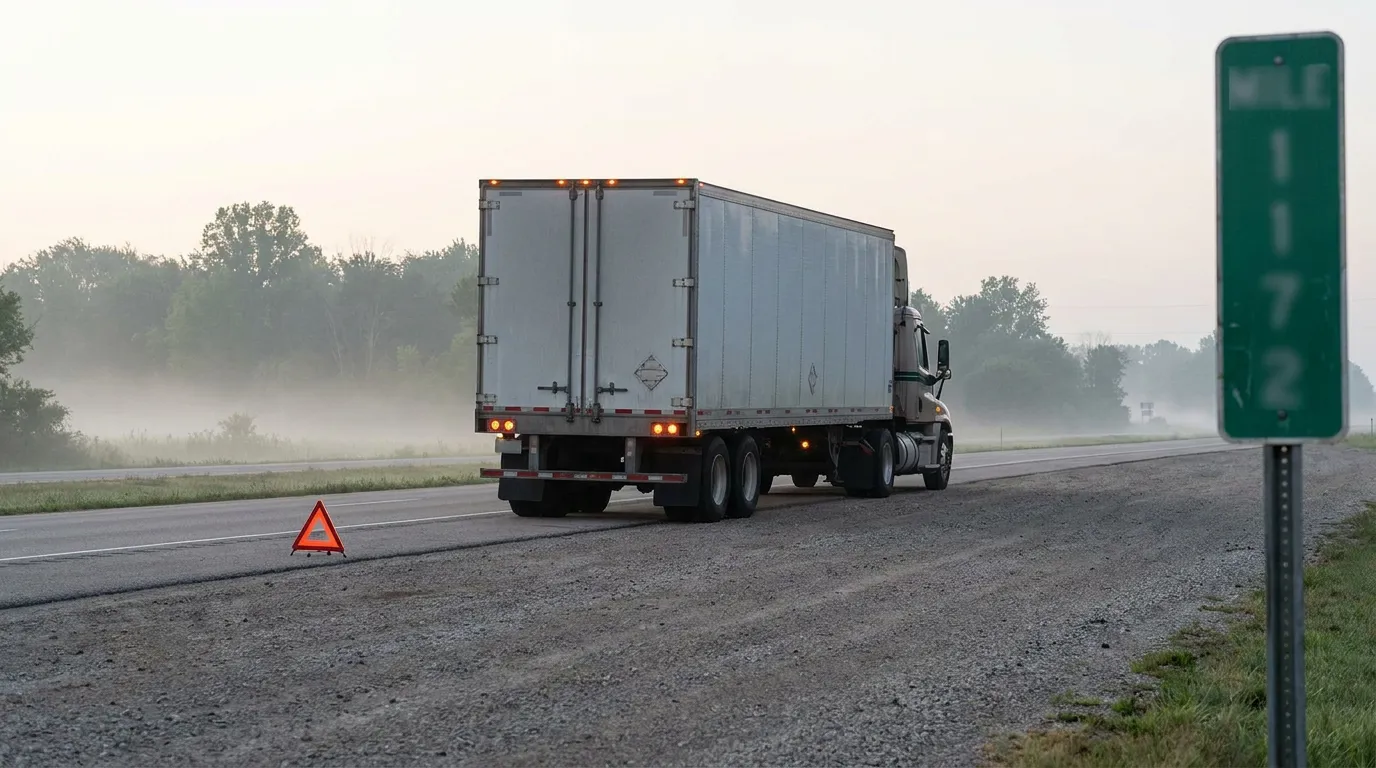
The Clock That Starts Ticking the Moment a Semi Comes to Rest
Key Takeaways: Federal rules under 49 C.F.R. § 382.303 require a motor carrier to test a commercial driver for alcohol as soon as practicable after a qualifying crash, with a written explanation required if testing does not occur within two hours and a requirement to stop attempting after eight hours, and to stop attempting controlled substance testing after 32 hours. Testing is not automatic after every collision; it is generally triggered by a fatality, or by a citation to the driver for a moving traffic violation combined with an injury requiring immediate off-site treatment or a disabling tow-away. When a carrier misses these windows, it must document why, and that record may itself become relevant evidence about the company’s safety practices. Because toxicology samples generally cannot be recreated later, missed deadlines often shift the focus to ELD data, black box downloads, dispatch records, and witness accounts. Testing records are typically held by the carrier and its third-party administrator, so obtaining them usually requires discovery or a negotiated exchange. Separately, Ohio generally allows two years to file bodily injury claims under Ohio Rev. Code § 2305.10 and two years from the date of death for wrongful death claims under Ohio Rev. Code § 2125.02.
Federal regulations generally require a motor carrier to test a commercial driver for alcohol as soon as practicable after a qualifying crash, with attempts required to stop after eight hours, and to stop attempting controlled substance testing after 32 hours. That timeline matters to injured people in Dayton, because a toxicology result that is never collected can rarely be recreated later. The 32-hour limit under 49 C.F.R. § 382.303 reflects the reality that impairing substances metabolize, and a sample’s evidentiary value generally degrades with every hour that passes. If you were seriously hurt in a collision with a tractor-trailer, understanding this window can shape whether critical proof of impairment ever reaches your case file.
If a commercial truck crash has left you or a family member with serious injuries, the timing of evidence preservation may affect your options. The team at The Attkisson Law Firm helps Dayton-area families investigate what happened and pursue accountability from carriers and drivers. Call 937-400-0000 or reach out to our team today to discuss your situation.
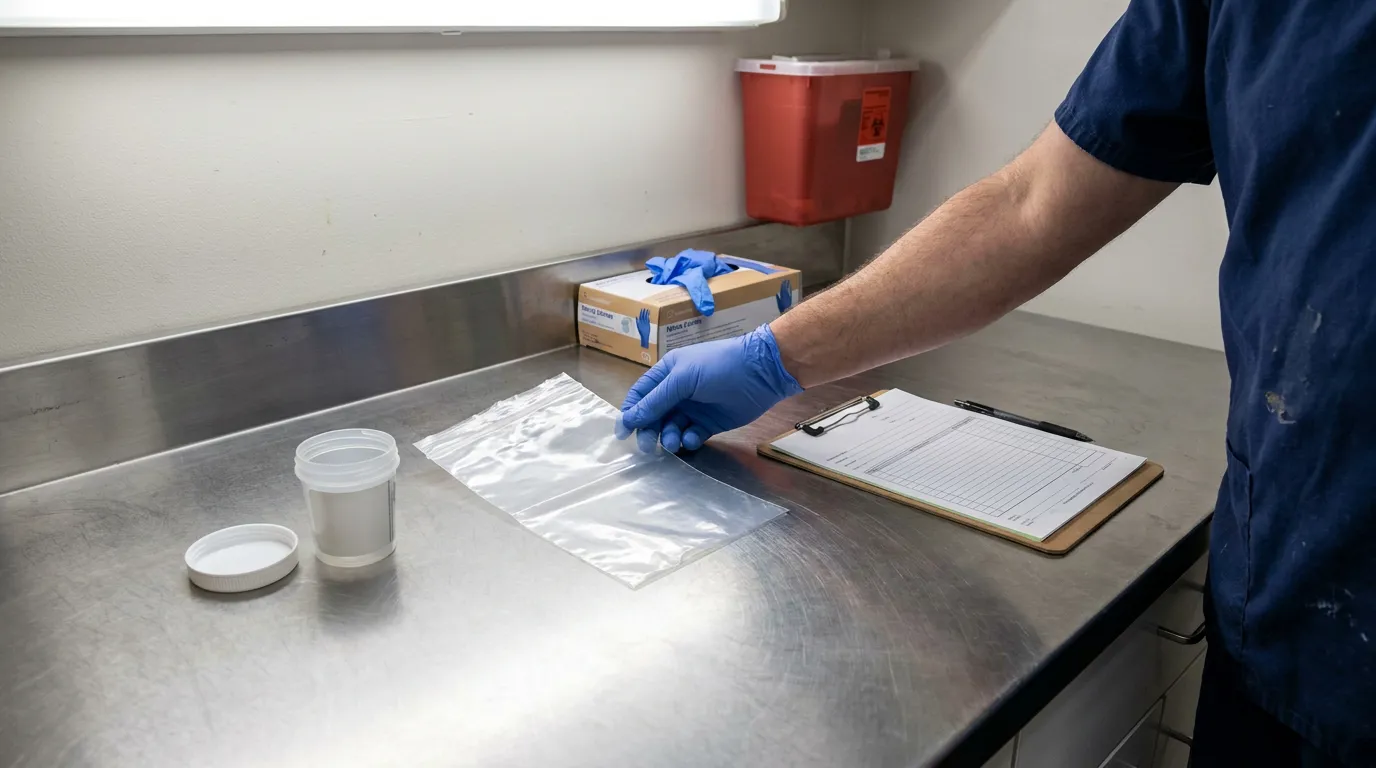
What Federal Law Requires After a Qualifying Truck Crash
The controlling authority here is generally federal, not local. Post-accident testing for CDL holders is governed by 49 C.F.R. Part 382, specifically § 382.303, enforced by the FMCSA. Because these are federal regulations, they generally apply nationwide, so a collision on I-75 in Montgomery County is typically subject to the same standards as one anywhere else.
The rule does not apply to every fender-bender. Testing is generally required when the crash involves a fatality, regardless of citation. In non-fatal crashes, testing is generally required only when the driver receives a citation for a moving traffic violation arising from the crash, and the crash results in either bodily injury requiring immediate medical treatment away from the scene or a vehicle being towed due to disabling damage. That citation condition is one of the most consequential limitations, and it is frequently misunderstood. The regulation also allows a carrier to use test results obtained by federal, state, or local officials under their own authority, if released to the carrier.
The Two Deadlines Are Not the Same
Alcohol and controlled substance testing generally operate on separate clocks. The regulation directs alcohol testing as soon as practicable, and if not performed within two hours, the carrier must prepare and maintain a record explaining why. If alcohol testing has not occurred within eight hours, the carrier must cease attempts and document the reason. For controlled substances, the carrier must cease attempts after 32 hours and again record why the test was not completed. The driver must remain available for testing, and is barred under 49 C.F.R. § 382.209 from consuming alcohol for eight hours after the crash or until tested, whichever comes first.
| Test Type | Target Window | Documentation Required If Missed |
|---|---|---|
| Alcohol | As soon as practicable | Written record after 2 hours |
| Alcohol | Outer limit of 8 hours | Attempts must cease; reason recorded |
| Controlled substances | Outer limit of 32 hours | Attempts must cease; reason recorded |
These required explanatory records can themselves become relevant evidence. When a carrier cannot articulate a credible reason for missing the controlled substance testing window, that gap may support arguments about the adequacy of its safety practices, subject to the rules of evidence, applicable law, and the facts of each case.
Why Testing Windows Are Built Around Science
The timing is generally not arbitrary. Research published by the National Academies addressing commercial driver testing procedures examines how testing protocols align with safety outcomes, reflecting the general understanding that alcohol typically clears the bloodstream faster than many controlled substances or their metabolites. That distinction explains why the alcohol window is measured in hours while the drug window stretches across more than a day, and it helps injured people evaluate whether a carrier’s delay was reasonable or evasive.
How Post-Accident Drug Testing Truck Crash Evidence Supports an Injury Claim
Toxicology results are rarely the whole case, but they can reshape it. In many Dayton truck crash claims, the central questions involve driver negligence, hours-of-service compliance, maintenance history, and training adequacy. A positive CDL driver drug test may support a negligence theory against the driver directly, and under certain circumstances against the motor carrier for negligent hiring, retention, or supervision, depending on what the carrier knew or should have known. A positive result generally reflects the presence of a substance or metabolite rather than proof of impairment at the time of the crash, so additional evidence is usually needed to connect it to causation.
Conversely, the absence of testing is not proof of innocence, and courts may consider various explanations for why a sample was never collected. A driver transported for emergency care presents different circumstances than one who left the scene and reported to a facility days later. These fact-sensitive issues generally require careful development through discovery rather than assumption.
Other Evidence That Corroborates or Replaces Toxicology
When a sample is missing, other Ohio truck accident evidence may become more important. Investigators and counsel often look to:
- Electronic logging device data and hours-of-service records
- Engine control module or "black box" download showing speed, braking, and throttle
- Dispatch communications, text messages, and delivery schedules
- Post-crash medical records that may reference intoxication or substance use
- Witness statements describing the driver’s behavior at the scene
- The carrier’s prior testing history and substance abuse program records
💡 Pro Tip: Much of this material may live on systems that overwrite themselves on short retention cycles. A written preservation demand sent early can matter as much as the test itself.
Practical Obstacles Dayton Families Encounter
One of the most common problems is simply not knowing the truck driver testing timeline exists. Families focused on surgery schedules and intensive care updates are often in no position to police a carrier’s regulatory compliance in the first 32 hours. By the time many injured people begin researching their rights, the controlled substance testing window may have already closed.
A second obstacle is access. Testing records are typically held by the motor carrier and its third-party administrator, not by the injured party, are subject to federal confidentiality restrictions under 49 C.F.R. Part 40, and generally are not produced voluntarily. Obtaining them typically requires formal discovery, a court order, or a negotiated pre-suit exchange, with outcomes varying by the cooperation of the parties.
A third complication involves parallel proceedings. Any administrative or regulatory review of a carrier’s compliance is generally separate from a civil personal injury lawsuit, and a regulatory finding does not automatically establish civil liability. Readers should not assume that an agency action resolves, or even affects, their private claim.
Federal Oversight Provides Context, Not a Substitute for Investigation
Federal agencies devote substantial attention to commercial vehicle safety. Materials from the FMCSA Trucking Safety Summit reflect ongoing federal collaboration on trucking safety standards and driver conduct. That oversight establishes the regulatory backdrop, though it does not perform the case-specific investigation an injured person’s claim may require. Someone still has to request the records, read the logs, and connect the timeline.
💡 Pro Tip: If you spoke with a responding officer, ask whether the crash report notes a citation issued to the driver for a moving violation. That detail often determines whether testing was mandatory at all in a non-fatal crash.
Deadlines That Govern Your Ohio Claim
Evidence deadlines and filing deadlines are generally different things. Ohio’s general statute of limitations for bodily injury actions is two years from when the cause of action accrues under Ohio Rev. Code § 2305.10, and wrongful death actions are generally subject to a two-year period running from the date of death under Ohio Rev. Code § 2125.02. These periods are not absolute in every scenario, and certain circumstances may alter them.
Tolling and discovery principles exist, including tolling for minors and for certain absences from the state, but Ohio courts generally apply such exceptions narrowly, and they do not apply automatically. Claims involving a governmental entity, such as a municipal vehicle, may carry separate notice or immunity provisions and different deadlines under Ohio Rev. Code Chapter 2744, and claims against the state are generally filed in the Ohio Court of Claims. Because these determinations are fact-dependent, readers should not assume any extension applies to their situation without individualized review.
Steps That Tend to Help in the First Weeks
Prompt action generally preserves more options than waiting does. Seeking complete medical documentation of injuries, requesting the official crash report, identifying witnesses while memories are fresh, and avoiding recorded statements to the carrier’s insurer before understanding your rights are all measures that commonly benefit injured people. Working with a Dayton truck accident lawyer early may help ensure that preservation letters go out before data cycles overwrite themselves.
💡 Pro Tip: Insurance adjusters sometimes request broad medical authorizations soon after a crash. You are generally not obligated to sign an open-ended release for another party’s insurer, and narrower alternatives often exist.
Frequently Asked Questions
1. Does every Dayton truck crash trigger mandatory drug testing?
No. Under 49 C.F.R. § 382.303, testing obligations generally attach only when specific conditions are met: a fatality, or a citation to the driver for a moving traffic violation combined with an injury requiring immediate off-site treatment or a disabling tow-away. Many serious collisions may fall within these triggers, but the analysis is fact-specific.
2. What happens if the carrier missed the 32-hour deadline?
The regulation requires the carrier to stop testing attempts and prepare a record explaining why the test was not administered. That documentation may be discoverable, and its adequacy can be examined in litigation, though the weight a court gives it depends on circumstances and applicable evidentiary rules.
3. Can I request the test results myself?
Generally not directly. These records are typically maintained by the motor carrier and its testing administrator and are protected by federal confidentiality rules, so access usually comes through civil discovery, a court order, or a negotiated exchange between counsel. An attorney can also send preservation demands, which may reduce the risk of destruction.
4. Is a negative drug test the end of my claim?
Not necessarily. Impairment is only one possible theory of negligence. Hours-of-service violations, inadequate maintenance, insufficient training, unrealistic dispatch schedules, and ordinary driver error may each support liability independent of any toxicology finding.
5. How long do I have to file a truck accident lawsuit in Ohio?
Bodily injury claims are generally subject to a two-year period under Ohio Rev. Code § 2305.10. Tolling provisions and separate rules for claims against governmental entities may apply in limited circumstances, and courts generally construe them narrowly, so early consultation is advisable.
Protecting Proof Before It Disappears
The federal framework generally gives motor carriers a narrow window: hours for alcohol, and no more than 32 hours for controlled substances. Those deadlines pass quickly, often while injured families are still in a hospital waiting room. The value of post-accident drug testing truck crash evidence may lie not only in what a positive result shows, but in what a carrier’s documented failure to test could suggest about its safety practices. If you want to understand more about how evidence and liability intersect in these cases, our truck accident legal insights cover related topics in depth. Every case turns on its own facts, and no outcome can be predicted from a regulation alone.
You do not have to sort through federal trucking regulations while recovering from catastrophic injuries. Reach the team at The Attkisson Law Firm by calling 937-400-0000, or schedule your consultation now to have your questions answered by attorneys who handle Dayton truck crash claims.
Disclaimer: This content is for informational purposes only and is not legal advice. Every case is unique, and results may vary. Consult an attorney about your specific circumstances.