
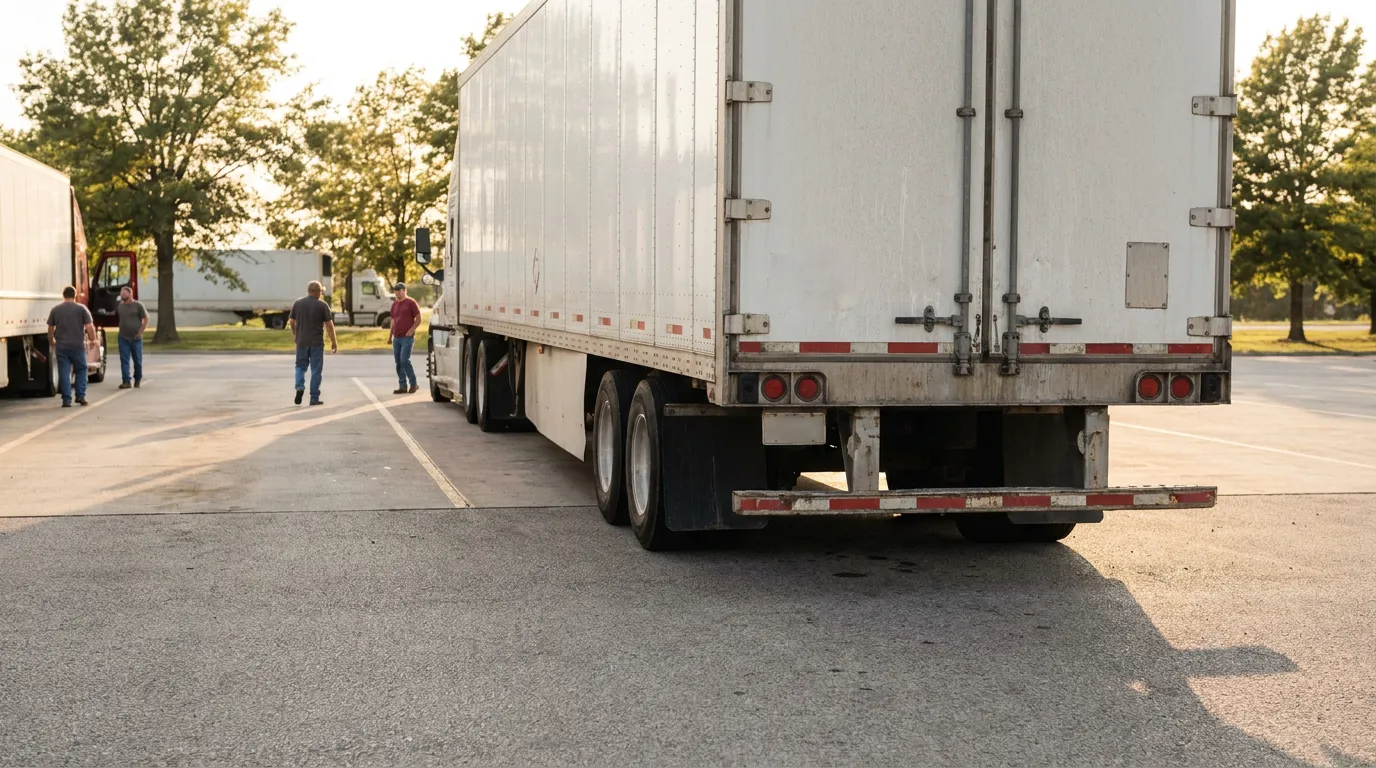
When a Passenger Vehicle Slides Beneath a Semi-Trailer
Key Takeaways: A truck underride crash occurs when a smaller vehicle slides beneath a tractor-trailer. The trailer bed sits near windshield height, potentially bypassing crumple zones and airbags while the steel frame intrudes into the occupant space. Common outcomes include traumatic brain injury, spinal cord damage, paralysis, and fatal trauma. Rear, side, and front underride account for most collisions. Federal rules require rear impact guards on most newer trailers, but side guards are not mandated and rear guards can corrode or fail. Liability may extend to the driver, motor carrier, trailer owner, and manufacturer, with product liability theories available under Ohio Rev. Code §§ 2307.71 through 2307.80. Ohio’s modified comparative fault rule under § 2315.33 may reduce or bar recovery. § 2305.10 sets a two-year filing deadline for bodily injury and product liability claims, with a ten-year repose period; wrongful death claims follow a two-year deadline under § 2125.02(F)(1). Prompt evidence preservation is critical.
A truck underride crash happens when a smaller vehicle travels under a tractor-trailer’s body, usually striking the rear or side where ground clearance allows a car to pass beneath the frame. Because the trailer bed sits at windshield height, the impact may bypass the car’s crumple zones and airbag protection, causing catastrophic head, neck, and spinal trauma or fatal injuries.
If you or a loved one suffered severe truck injuries in a collision with a commercial trailer near Dayton, The Attkisson Law Firm is prepared to review what happened. Call 937-400-0000 or reach out to our Dayton team to discuss your options.

Underride Crash Mechanics Explained in Plain Terms
The physics of an underride collision differ fundamentally from a standard rear-end wreck. In a typical crash, vehicles meet bumper to bumper and engineered crush structures dissipate force. In an underride, the car’s bumper and engine may pass under the trailer while the trailer’s steel frame strikes the A-pillars, roofline, and glass.
Three configurations account for most underride collisions. Rear underride occurs when a vehicle strikes the back of a stopped or slow-moving trailer. Side underride occurs when a trailer turns or backs across a roadway. Front override happens when a truck rides up over a smaller vehicle.
Federal equipment standards require rear impact guards on most trailers, but real-world performance varies. Federal Motor Vehicle Safety Standards 223 and 224 impose strength and configuration requirements on trailers manufactured on or after January 26, 1998. Guards can corrode, sustain damage, or be mounted on older trailers built before current requirements. Side underride guards are not mandated, which is why side impacts remain lethal. These distinctions matter when evaluating whether a claim should target the driver, carrier, trailer owner, or manufacturer.
Why Truck Underride Guard Accident Injuries Are So Devastating
The injury pattern reflects direct intrusion into the occupant space. When the trailer frame enters the cabin at head level, common harms include:
- Traumatic brain injury, including penetrating head wounds
- Cervical spine fractures and spinal cord damage causing paralysis
- Severe facial, ocular, and degloving injuries
- Decapitating or near-decapitating trauma in high-speed collisions
- Crush injuries to the chest and upper extremities
Survivors frequently face lifelong consequences. Rehabilitation, adaptive housing, in-home care, and permanent loss of earning capacity are common for a Dayton catastrophic truck injury victim. Ohio’s civil actions chapter defines "economic loss" as pecuniary harm including lost wages and compensation.
When an underride collision proves fatal, Ohio law provides a separate cause of action. Surviving family members pursue a wrongful death claim under Ohio Rev. Code Chapter 2125. The personal representative brings the action for the exclusive benefit of the surviving spouse, children, parents, and next of kin as set forth in § 2125.02(A), and § 2125.02(F)(1) requires filing within two years after the date of death.
💡 Pro Tip: Photograph the trailer’s rear guard, mounting brackets, and reflective conspicuity tape before the trailer is repaired or returned to service. That evidence can disappear within days.
Building an Underride Injury Claim in Ohio
Liability in these cases is rarely limited to one party. A thorough investigation may examine the driver’s hours-of-service compliance, the carrier’s maintenance records, the trailer owner’s upkeep of the impact guard, and the design decisions of the trailer or guard manufacturer. Truck cases involve federal regulations, electronic logging data, and corporate defendants, which is a large part of what makes truck cases different from ordinary car crash claims.
Product Liability Theories Against Trailer and Guard Manufacturers
Ohio’s product liability framework appears at Ohio Rev. Code §§ 2307.71 through 2307.80. Those sections supply the theories raised when an underride guard fails: defective design under § 2307.75, defect due to inadequate warning or instruction under § 2307.76, and nonconformance with a manufacturer’s representation under § 2307.77. Under § 2307.75(F), a product is not defective in design or formulation if, at the time it left the manufacturer’s control, a practical and technically feasible alternative design or formulation was not available that would have prevented the harm. Compliance with government safety and performance standards is addressed under § 2307.80, which shields manufacturers from punitive damages when they have fully complied with all applicable government safety and performance standards.
How Ohio Divides Fault Among Multiple Defendants
Ohio applies a modified comparative fault rule that may reduce or eliminate recovery. Under Ohio Rev. Code § 2315.33, contributory fault "does not bar the person as plaintiff from recovering damages… if the contributory fault of the plaintiff was not greater than the combined tortious conduct of all other persons." A plaintiff found more than 50 percent at fault recovers nothing. The court "shall diminish any compensatory damages recoverable by the plaintiff by an amount that is proportionately equal to the percentage of tortious conduct of the plaintiff."
Fault may also be assigned to parties who were never sued. The apportionment provisions in Ohio Rev. Code §§ 2307.22 and 2307.23 govern how responsibility is divided among a truck driver, motor carrier, trailer manufacturer, and injured motorist. A defendant found more than 50 percent responsible may be jointly and severally liable for economic loss, while noneconomic damages are allocated in proportion to each defendant’s share of fault.
Evidence That Often Determines the Outcome
Underride cases turn on physical and electronic proof that can degrade quickly. Preservation letters, trailer inspections, download of the tractor’s engine control module, and scene documentation are time-sensitive steps. Working with a Dayton truck accident attorney early may help ensure that a spoliation demand reaches the carrier before repairs occur.
| Potentially Responsible Party | Typical Theory | Common Evidence |
|---|---|---|
| Truck driver | Negligent operation, fatigue | Logs, ELD data, phone records |
| Motor carrier | Negligent maintenance, training, hiring | DVIRs, repair files, driver qualification file |
| Trailer owner or lessee | Failure to maintain impact guard | Inspection records, guard condition |
| Trailer or guard manufacturer | Design defect, inadequate warning | Design files, testing data, standards history |
Ohio Filing Deadlines Every Underride Victim Should Know
Ohio generally allows two years to file a bodily injury lawsuit. Under Ohio Rev. Code § 2305.10(A), an action based on a product liability claim and an action for bodily injury must be brought within two years after the cause of action accrues. The Cleveland Law Library’s summary of Ohio statutes of limitations lists two years for personal injury actions.
Product liability claims may carry an additional outer limit. Ohio Rev. Code § 2305.10(C)(1) provides that no product liability cause of action accrues more than ten years after the product was delivered to its first purchaser or lessee, subject to statutory exceptions.
Limited tolling provisions exist, and courts may interpret them narrowly. Ohio Rev. Code § 2305.16 may toll the limitations period for claimants who are minors or of unsound mind at the time the cause of action accrues. An unexcused failure to commence an action on time generally results in dismissal regardless of injury severity.
💡 Pro Tip: If a government entity, such as a municipal fleet or road authority, may share responsibility for an underride crash, the notice and filing rules can differ significantly from the standard two-year civil deadline. Ask about that possibility early.
Practical Steps After an Underride Collision Near Dayton
Immediate medical documentation is the foundation of any serious injury claim. Head and neck trauma can present with delayed symptoms, and gaps in treatment records frequently become the centerpiece of a defense argument. Follow the treatment plan and report every symptom.
Be cautious with early contact from the carrier’s insurer. Recorded statements taken before an investigation is complete may be used to support a comparative fault argument. You are not obligated to give a recorded statement to another party’s insurer.
Gather and protect what you can. Witness contact information, dashcam footage, photographs of the trailer and roadway, and the crash report can help reconstruct underride crash mechanics. A truck underride guard accident injuries lawyer may pursue records that individuals cannot obtain on their own.
Frequently Asked Questions
1. Does a missing side underride guard automatically mean the trucking company is liable?
No. Side guards are not required by federal standards, so liability depends on other proof, such as negligent operation, inadequate conspicuity markings, or a design defect theory under Ohio Rev. Code §§ 2307.75 through 2307.77.
2. Can I still recover if I was partly at fault for the underride crash?
Possibly. Ohio Rev. Code § 2315.33 permits recovery when a plaintiff’s contributory fault is not greater than the combined tortious conduct of all other persons, though any award is reduced in proportion to the plaintiff’s share of fault. If that share exceeds 50 percent, recovery is barred.
3. How long do I have to file an underride injury claim in Ohio?
Ohio Rev. Code § 2305.10(A) provides two years from accrual for bodily injury and product liability claims, and a ten-year repose period may apply to product claims.
4. What claim applies if a family member died in the crash?
Ohio Rev. Code Chapter 2125 governs wrongful death actions, addressing who may bring the claim, recoverable damages, and distribution among beneficiaries, with a two-year deadline from the date of death under § 2125.02(F)(1).
5. Why does the trailer need to be inspected so quickly?
Guards are often repaired, trailers repainted, and electronic data overwritten. Prompt preservation demands may protect evidence central to proving how the underride occurred.
Protecting Your Rights After a Catastrophic Truck Crash
Underride collisions produce some of the most severe injuries seen in Ohio traffic litigation because the trailer structure may intrude directly into the occupant space. Liability may extend across the driver, carrier, trailer owner, and equipment manufacturers, and Ohio’s comparative fault and apportionment statutes may shape recovery. Because critical evidence and the applicable filing window both erode quickly, delay carries real risk.
To have your situation reviewed by The Attkisson Law Firm, call 937-400-0000 or request a consultation today. Our Dayton team is ready to listen.
Disclaimer: This content is for informational purposes only and is not legal advice. Every case is unique, and results may vary. Consult an attorney about your specific circumstances.