
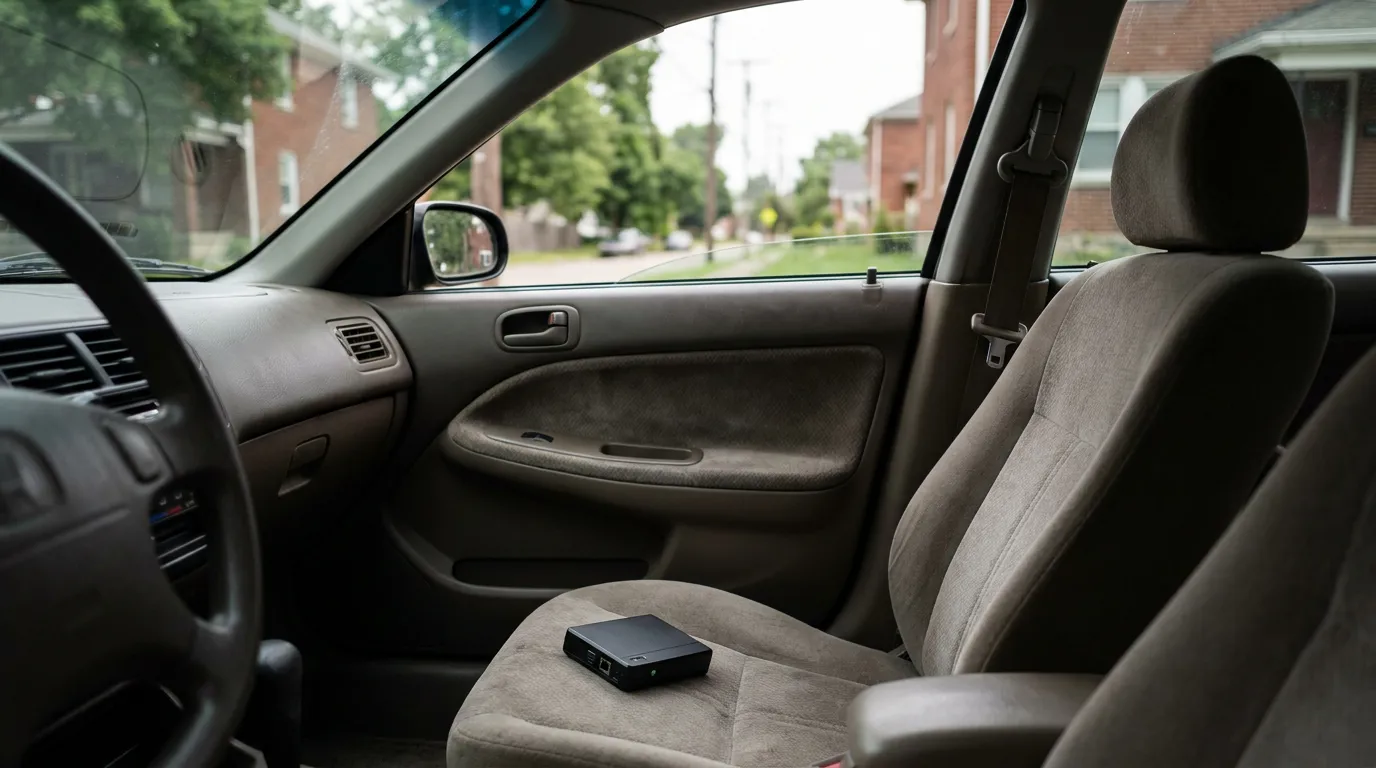
The Hidden Witness Inside Your Vehicle After a Dayton Collision
Key Takeaways: An event data recorder (EDR) is a module, typically in the airbag control unit, that stores seconds of vehicle data surrounding a crash: pre-impact speed, throttle, braking, delta-V, seat belt status, and airbag deployment. Retrieval requires specialized equipment and trained technicians. Access involves legal questions of ownership, insurance rights, consent, or court orders. In Dayton crashes, objective data is critical under Ohio’s modified comparative fault rules (Ohio Rev. Code § 2315.33). EDR downloads may supply causation evidence in wrongful death claims and reveal vehicle defects. Ohio’s two-year filing deadlines set the outer limit, but wrecked vehicles are often repaired, sold, or crushed within weeks, making prompt preservation critical.
Most modern vehicles quietly record seconds of data when a crash occurs. That event data recorder may capture pre-impact speed, throttle position, brake application, seat belt status, and airbag deployment timing. In a serious Dayton collision where the other driver denies fault, that objective snapshot can matter more than conflicting recollections.
If you or a loved one suffered serious injuries in a crash, The Attkisson Law Firm can help you understand what evidence may still exist. Call 937-400-0000 or contact us now to discuss preserving crash data before it disappears.
What an Event Data Recorder Actually Is
An event data recorder is a small electronic module that stores a brief window of vehicle performance information surrounding a crash event. In most passenger vehicles, the EDR function is housed within the airbag control module. The device is not a continuous recorder like an aviation black box; it typically captures only seconds before, during, and immediately after a triggering event.
The scope of recorded information varies by manufacturer, model year, and system design. Federal regulations set minimum data elements for vehicles equipped with an EDR, but not every parameter is required. Some vehicles log steering input and stability control while others capture a narrower set.
Where the Data Lives and How It Is Retrieved
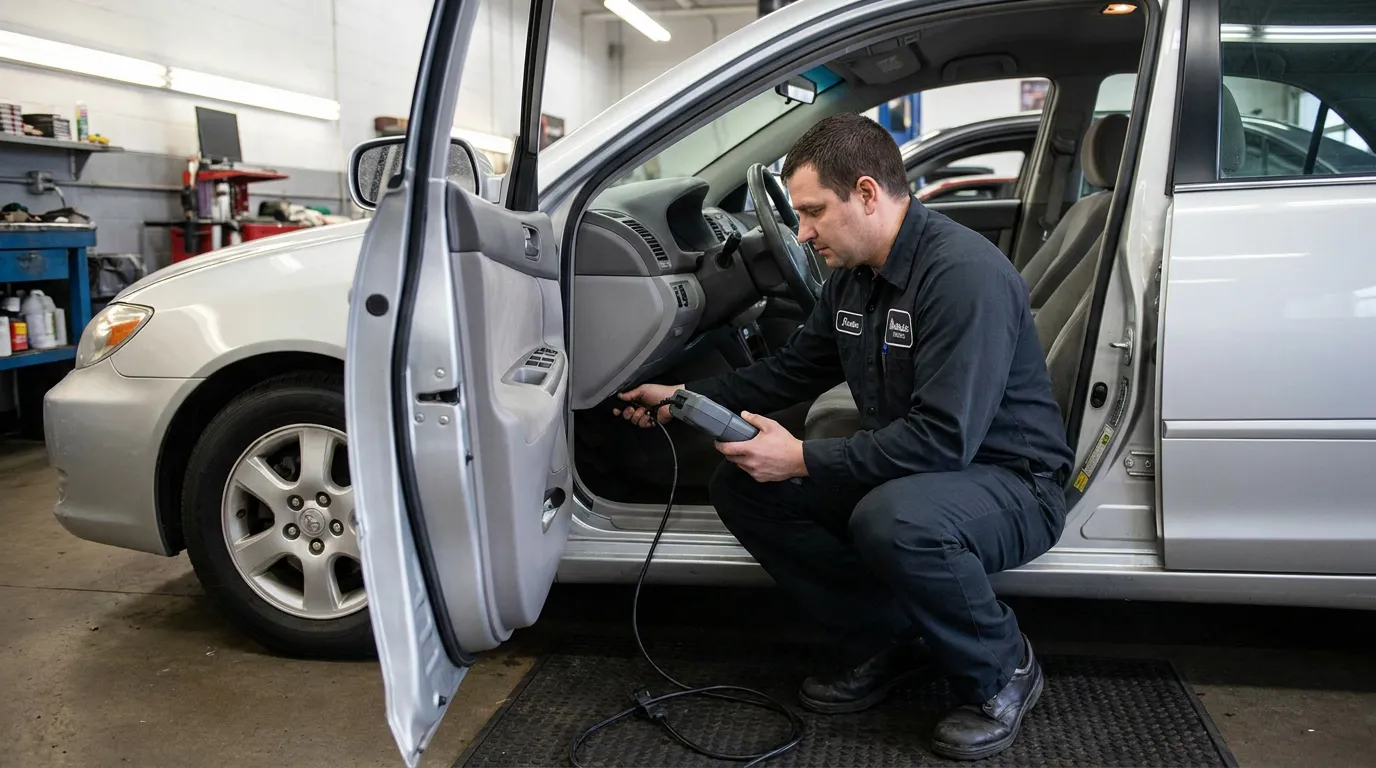
Crash data retrieval requires specialized hardware and trained personnel following manufacturer-specific protocols. Technicians connect to the diagnostic port or, when the vehicle sustained heavy damage, remove and image the module directly. Improper handling can corrupt or overwrite the record.
Access is often a legal question as much as a technical one. Vehicle ownership, insurance salvage rights, and wreckage control affect who may authorize a download. When the vehicle belongs to another party, consent, a subpoena, or court order may be required.
Common Data Points a Passenger Vehicle EDR May Capture
- Pre-crash vehicle speed in the seconds before impact
- Accelerator pedal position and throttle percentage
- Brake activation and anti-lock brake engagement
- Change in velocity (delta-V) during impact
- Seat belt buckle status for occupied positions
- Airbag deployment timing and suppression signals
Why Event Data Recorder Crash Evidence Can Decide Fault in Ohio
Ohio applies a modified comparative fault framework, making objective data unusually valuable. Under Ohio Rev. Code § 2315.33, contributory fault does not bar recovery if the plaintiff’s fault was not greater than the combined tortious conduct of others. When an insurer argues an injured driver was speeding or failed to brake, event data recorder crash evidence may directly contradict that theory.
Even partial fault does not eliminate a claim; it reduces it. The contributory fault statute directs the court to diminish compensatory damages by an amount proportionately equal to the plaintiff’s percentage of tortious conduct as determined pursuant to Ohio Rev. Code § 2315.34. If the plaintiff’s share of fault reaches 51% or more, recovery is barred entirely, so EDR readings often become focal points in crash reconstruction disputes.
💡 Pro Tip: Ask early whether your own vehicle also contains recoverable data. Downloads from both vehicles sometimes tell a more complete story than one alone.
Ohio’s Filing Deadlines and the Race to Preserve Data
Ohio generally allows two years to bring a bodily injury claim. Ohio Rev. Code § 2305.10(A) provides that an action for bodily injury shall be brought within two years after the cause of action accrues. The broader Ohio limitations chapter is the controlling primary source.
A two-year deadline creates a false sense of comfort. Unexcused failure to file on time typically results in dismissal. Meanwhile, a damaged vehicle may be repaired, sold, or crushed within weeks, taking the module with it. Tolling provisions exist for minors or persons of unsound mind under Ohio Rev. Code § 2305.16, but apply narrowly.
Claims involving government entities follow separate procedural rules. Political subdivision claims are governed by Ohio Rev. Code Chapter 2744, and state claims proceed in the Court of Claims under Chapter 2743, each with distinct timing and notice requirements.
Preservation Steps That Often Matter Most
A written preservation demand is frequently the first meaningful step. Such a letter puts the vehicle’s custodian, insurer, or tow yard on notice that the module and vehicle should not be altered or destroyed. Ohio recognizes an independent tort of intentional spoliation, and courts may address destruction through evidentiary consequences. These principles often apply in commercial vehicle claims; readers can learn more about black box records in Dayton truck cases.
| Evidence Source | Typical Availability Window | Why It Fades |
|---|---|---|
| Passenger vehicle EDR | Until repair, resale, or salvage | Module removed, replaced, or overwritten |
| Nearby surveillance video | Often days to weeks | Automatic system overwriting |
| Vehicle physical damage | Most reliably obtained before repairs begin | Restoration removes direct access to crush measurements, though data may still be recoverable through photogrammetry and pre-repair photographs |
| Witness recollection | Degrades continuously | Memory fades and contact details change |
When EDR Data Supports a Wrongful Death Claim
Families pursuing fatal crash claims often rely heavily on recorder downloads because the person who could explain the crash is gone. Ohio Rev. Code § 2125.01 provides that when death is caused by wrongful act, neglect, or default which would have entitled the injured party to maintain an action, the responsible party may be liable. Speed, braking, and throttle readings can supply causation evidence that testimony no longer can.
Ohio law addresses who must bring the case and how quickly. Under Ohio Rev. Code § 2125.02(A), a wrongful death action shall be brought by the personal representative of the decedent for the benefit of the surviving spouse, children, parents, and other next of kin. That representative is positioned to authorize or demand a download, making prompt probate court appointment practically important.
A two-year deadline generally applies to wrongful death filings. Ohio Rev. Code § 2125.02(F)(1) states that a civil action for wrongful death shall be commenced within two years after the decedent’s death. Because wrecked vehicles rarely survive that long intact, waiting can forfeit strong evidence.
When the Vehicle Itself May Be the Problem
Sometimes a download points toward a defect. If data reflects brakes were applied but the vehicle did not decelerate as expected, or an airbag failed to deploy within expected parameters, a product liability theory may warrant investigation, though EDR data alone rarely establishes a defect without expert analysis. Ohio Rev. Code § 2305.10(C)(1) establishes a ten-year statute of repose for product liability claims measured from delivery to the first purchaser or lessee.
A parallel repose provision governs product-based wrongful death claims. Ohio Rev. Code § 2125.02(F)(2)(a) generally bars product liability wrongful death claims accruing later than ten years from delivery to the first purchaser.
💡 Pro Tip: Photograph the vehicle identification number and the tow yard’s name and address before leaving the scene. Locating a vehicle later is often the single biggest obstacle to obtaining a download.
Practical Limits Every Claimant Should Understand
EDR data can be powerful, but it is not infallible or complete. Recording windows are short, and the device captures nothing about weather, road debris, or phone use. Speed values can carry margins of error tied to tire size, wheel slip, or module calibration.
Data may cut in both directions. A download that helps one party may reveal something unhelpful to another. Working with a firm that handles event data recorder crash evidence claims allows information to be evaluated alongside police reports, medical records, and scene evidence.
Finally, admissibility is a separate question from availability. Under the Ohio Rules of Evidence, courts may consider authentication, expert qualifications, reliability, and chain-of-custody issues before permitting a jury to hear the data.
Frequently Asked Questions
1. Does every car in Dayton have an event data recorder?
Not every vehicle does, and capabilities vary widely. Most late-model passenger vehicles include EDR functionality within the airbag control module, but older vehicles may record limited data or none.
2. Who owns the black box data in my vehicle?
Under the federal Driver Privacy Act of 2015, EDR data is generally the property of the vehicle’s owner or lessee. Retrieval by others is restricted absent owner consent, a court or administrative order, certain safety research uses, or emergency response needs. When the other driver’s vehicle holds relevant data, obtaining it usually requires consent or formal legal process.
3. How soon should crash data retrieval happen?
As soon as reasonably possible. Because vehicles are frequently repaired or salvaged within weeks, waiting can eliminate evidence long before filing deadlines arrive.
4. Can EDR data alone win my case?
Rarely on its own. Crash data is typically one component of proving duty, breach, causation, and damages, working best when corroborated by scene photographs, physical damage analysis, witness accounts, and medical documentation.
5. What if the insurer already has the vehicle?
Notify counsel promptly. An insurer or salvage buyer may dispose of a vehicle it lawfully owns absent a preservation obligation, so a prompt written demand is often necessary to protect access to the module.
Protecting the Evidence Before It Disappears
An event data recorder can provide an objective account of the seconds that changed your life, but only if someone acts before the vehicle is repaired, sold, or destroyed. Ohio’s comparative fault rules make those recorded numbers directly relevant to recovery, and the state’s two-year filing deadlines may leave less breathing room than they appear to.
If a serious crash has upended your family’s life, The Attkisson Law Firm is ready to evaluate what evidence may still be recoverable. Call 937-400-0000 or request a consultation today.
Disclaimer: This content is for informational purposes only and is not legal advice. Every case is unique, and results may vary. Consult an attorney about your specific circumstances.